
There’s something undeniably magical about a perfectly baked croissant — golden, crisp layers giving way to a soft, buttery center. If you’ve ever wanted to master the art of French pastry, learning how to make croissants at home is the ultimate baking challenge — and a rewarding one at that. This comprehensive guide walks you through each step, from mixing the détrempe to rolling the final crescent, ensuring that your homemade croissants rival those of a Parisian boulangerie.
Table of Contents
Table of Contents
WHY YOU’LL LOVE THIS RECIPE
- Incredible Flavor: Buttery, flaky, and tender — every bite melts in your mouth
- Beginner-Friendly Instructions: Step-by-step guidance, even for first-timers
- Perfect for Any Occasion: Brunches, holidays, or indulgent mornings
- Authentic Technique: Laminated dough done the right way
- Make Ahead Options: Freeze before baking for fresh croissants anytime
Unlike store-bought versions, these croissants are made with real butter and no shortcuts. What sets this recipe apart is its careful attention to lamination, proofing, and shaping — all broken down so even a home baker can succeed.
INGREDIENTS NEEDED
Here’s what you’ll need to make classic French croissants from scratch:
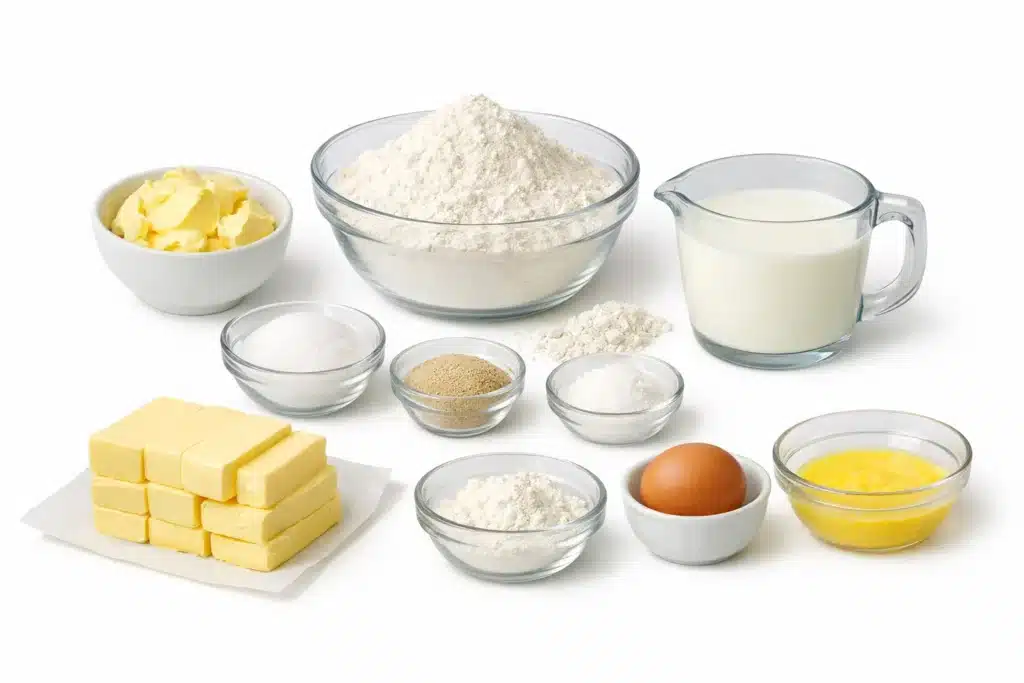
For the Dough (Détrempe)
- ¼ cup (56g) unsalted butter, softened to room temperature
- 4 cups (500g) all-purpose flour, plus extra for rolling
- ¼ cup (50g) granulated sugar
- 2 tsp salt
- 1 tbsp active dry or instant yeast
- 1½ cups (360ml) cold whole milk
For the Butter Block (Tourrage)
- 1½ cups (340g) unsalted butter, softened slightly
- 2 tbsp (16g) all-purpose flour
Tip: Use European-style butter if possible — its higher fat content creates better lamination.
For the Egg Wash
- 1 large egg
- 2 tbsp (30ml) whole milk
HOW TO MAKE CROISSANTS
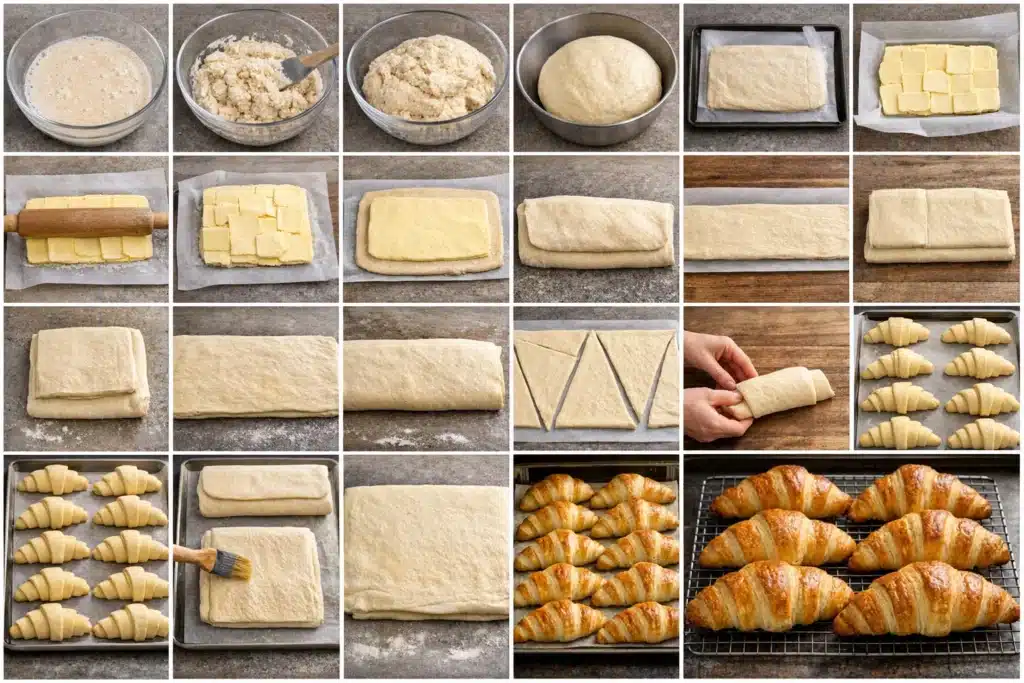
Step 1 – Prepare the Dough (Détrempe)
In a large bowl, dissolve the yeast in cold milk with a touch of honey. Let it activate for 10–15 minutes until slightly foamy. Add in the sugar, softened butter, flour, and salt. Stir everything together with a spatula until a shaggy dough forms.
Transfer the dough to a lightly floured surface and knead for 3–4 minutes until smooth but soft. Place it back in the bowl, cover with plastic wrap, and let it rise in a warm spot until doubled in size (about 1 hour).
Step 2 – Shape & Chill the Dough
Punch down the dough and shape it into a rectangle about 7×10 inches. Wrap it tightly in parchment paper and plastic wrap. Place it in the freezer for 2–3 hours (or overnight) to firm up the structure.
Step 3 – Make the Butter Block
While the dough chills, prepare the butter block. Slice cold butter and arrange it between two sheets of parchment in a 5×6.5-inch rectangle. Sprinkle with flour and gently pound with a rolling pin until the butter spreads evenly to the edges. Chill until firm but pliable.
Step 4 – Enclose the Butter
Roll the dough to a 7×10 inch rectangle if needed. Place the butter block in the center and fold the dough over it like a book, fully enclosing the butter. Press the seams to seal and lightly pat the dough to encourage binding.
⚠️ Important: The dough and butter must be cold but pliable for lamination. If either is too soft or firm, let rest or chill accordingly.
Step 5 – First Lamination (Double Fold)
Flour your surface generously. Roll the dough into a long rectangle (about 16 inches). Fold the ends toward the center and then fold the whole thing in half like a book — this is a double fold. Wrap in plastic and chill for 45–60 minutes.
Step 6 – Second Lamination (Single Fold)
Repeat the rolling process, keeping the dough about 5 inches wide. This time, fold the dough into thirds like a letter. Chill again for at least 1 hour.
Step 7 – Sheet and Rest the Dough
Roll out the dough to a 10-inch wide rectangle about ¼-inch thick. Rest in the refrigerator for 30–45 minutes to relax the gluten. Then roll it again to a final thickness of about 4–5mm.
💡 If the dough resists or shrinks, chill again — relaxed dough rolls better and won’t tear.
Step 8 – Cut the Croissants
Trim the edges to form a perfect rectangle. Mark and cut into long triangles with a base of about 3.5 inches. For even rise, use a sharp knife or pizza cutter and press — don’t drag.
Step 9 – Shape and Proof
Cut a small notch at the base of each triangle, gently pull the ends to widen, then roll from base to tip. Place each croissant on a parchment-lined tray, tip side down. Cover loosely and proof for 2–3 hours at around 75°F/24°C, until doubled and jiggly.
Step 10 – Bake
Preheat oven to 375°F (190°C). Whisk together egg and milk for the egg wash. Brush each croissant gently, avoiding drips.
Bake for 20–30 minutes, rotating halfway through, until deeply golden and crisp. Let cool on a wire rack for at least 15 minutes before serving.

SERVING AND STORAGE TIPS
- Serve Fresh: Best enjoyed warm with jam, butter, or simply plain
- Pairing Ideas: Delicious with café au lait, tea, or hot chocolate
- Storage: Store leftovers in an airtight container at room temp for 2 days
- Freezer Friendly: Freeze before or after baking for up to 1 month
- Reheating: Warm in a 300°F oven for 5–8 minutes until crisp again
HELPFUL NOTES
- Flour Tip: Use low-protein all-purpose flour to prevent a tough dough
- Humidity Helps: Proofing in a warm, slightly humid oven helps them rise better
- Timing: Start a day ahead — croissants are a slow-rise pastry
- Butter Quality: Use high-fat European butter for the flakiest layers
- Avoid Overproofing: Croissants should puff and jiggle — not collapse or overexpand
CONCLUSION
Making croissants at home may seem like an ambitious project, but with patience and the right steps, it’s totally doable. This guide on how to make croissants breaks the process into clear, achievable parts. The result? Buttery, golden pastries that’ll impress anyone who tastes them.
👉 If you tried this recipe, leave a comment and star rating below — I’d love to hear from you!
📌 Pin it on Pinterest or share your results on Facebook.
💬 Have you tried filling them with chocolate or almond cream? Let us know your favorite twist!
FREQUENTLY ASKED QUESTIONS (FAQ)
Can I make croissants ahead of time?
Yes! You can shape the croissants, freeze them on a tray, and then bake straight from frozen (just add 5–10 minutes to the bake time).
What if I don’t have European-style butter?
Regular unsalted butter works fine, but higher fat butter yields a richer texture and better lamination.
How do I make these gluten-free?
Unfortunately, croissants rely heavily on gluten for their layered structure. Gluten-free alternatives exist but require special flours and binding agents.
Why didn’t my croissants rise during proofing?
Likely causes include old yeast, cold proofing temperature, or overworked dough. Ensure your yeast is active and proof in a warm, draft-free space.
Can I fill these croissants?
Absolutely! Add chocolate batons or almond paste before rolling. Just make sure the filling doesn’t leak out during baking.


Classic Homemade Croissants
Ingredients
Method
- In a large bowl, mix yeast with cold milk. Add sugar, softened butter, flour, and salt, stirring until a shaggy dough forms.
- Knead the dough on a lightly floured surface for 3–4 minutes until smooth. Cover and let rise until doubled, about 1 hour.
- Shape the dough into a 7×10-inch rectangle, wrap tightly, and chill in the freezer for 2–3 hours until firm.
- Prepare the butter block by pounding butter and flour between parchment into a 5×6.5-inch rectangle. Chill until pliable.
- Enclose the butter inside the dough, sealing edges well. Roll into a long rectangle and perform a double fold. Chill 45–60 minutes.
- Roll again and fold into thirds like a letter. Chill for at least 1 hour.
- Roll dough to a large rectangle about 4–5 mm thick. Rest briefly if dough resists.
- Cut into long triangles and roll from base to tip to shape croissants. Place seam-side down on lined trays.
- Proof loosely covered at about 75°F (24°C) for 2–3 hours until puffy and jiggly.
- Brush gently with egg wash and bake at 375°F (190°C) for 20–30 minutes until deeply golden. Cool slightly before serving.