
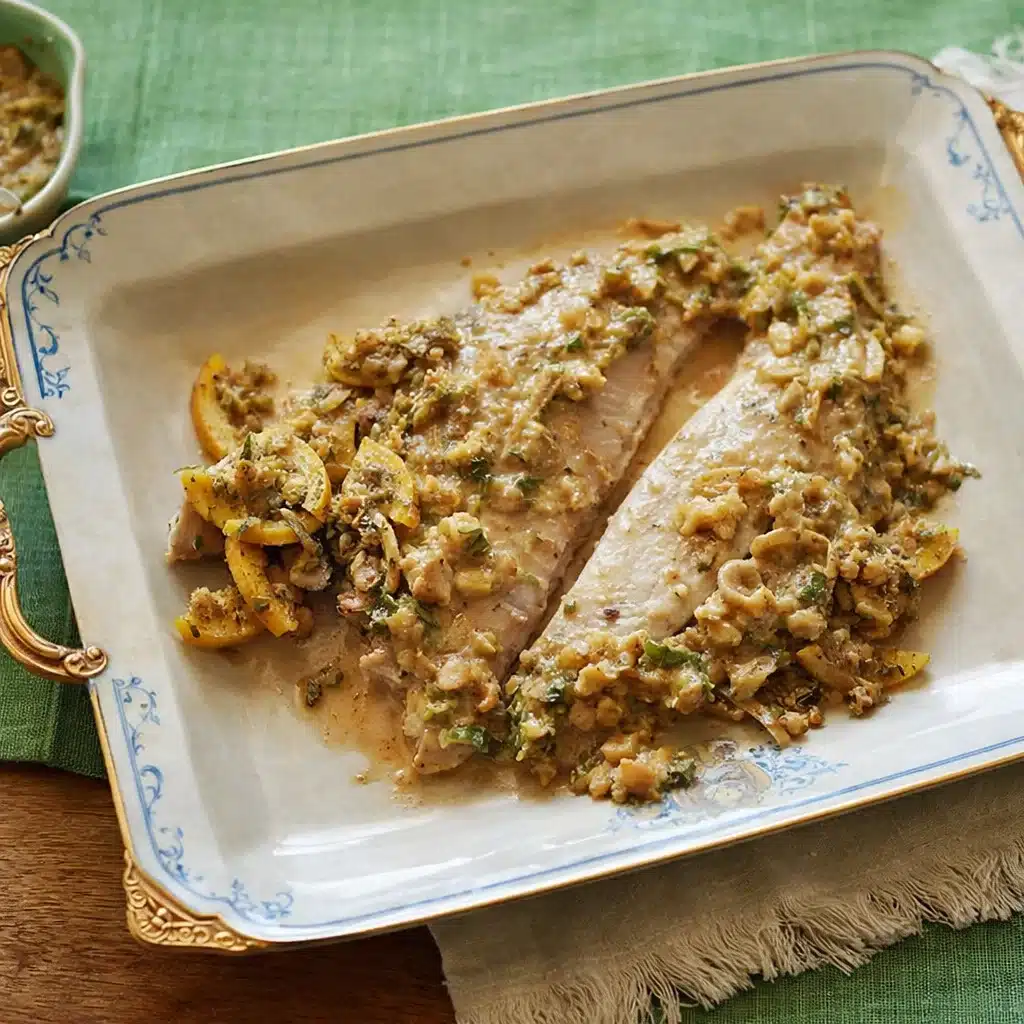
When you’re looking for a tender, flaky fish dinner that tastes like it took hours to prepare—but didn’t—this Slow-Roasted Fish With Mustard and Dill is the answer. Roasted gently at low heat and finished with a creamy mustard-dill sauce, this dish is all about simplicity and sophistication.
Unlike searing or grilling, slow-roasting locks in moisture and flavor without the risk of overcooking. Paired with aromatics like ginger, lemon, and mustard seeds, the result is a buttery, melt-in-your-mouth fish that’s ideal for dinner parties, holidays, or elevated weeknight meals.
Table of Contents
Table of Contents
Why You’ll Love This Recipe
- Moist and Tender Texture – Slow roasting keeps the fish flaky, never dry.
- Herbaceous and Aromatic – Fresh dill, lemon, and ginger infuse the fish with subtle, bright flavors.
- Perfect for Entertaining – Beautiful presentation and an elegant sauce wow guests.
- Low Effort, High Reward – Minimal prep, no complicated techniques.
- Balanced Sauce – Creamy, tangy, and slightly sharp from Dijon and crème fraîche.
This recipe stands out from other baked fish dishes thanks to its low-and-slow cooking method and a rich finishing sauce that’s both refined and comforting. It’s a thoughtful yet unfussy way to serve seafood.
Ingredients Needed
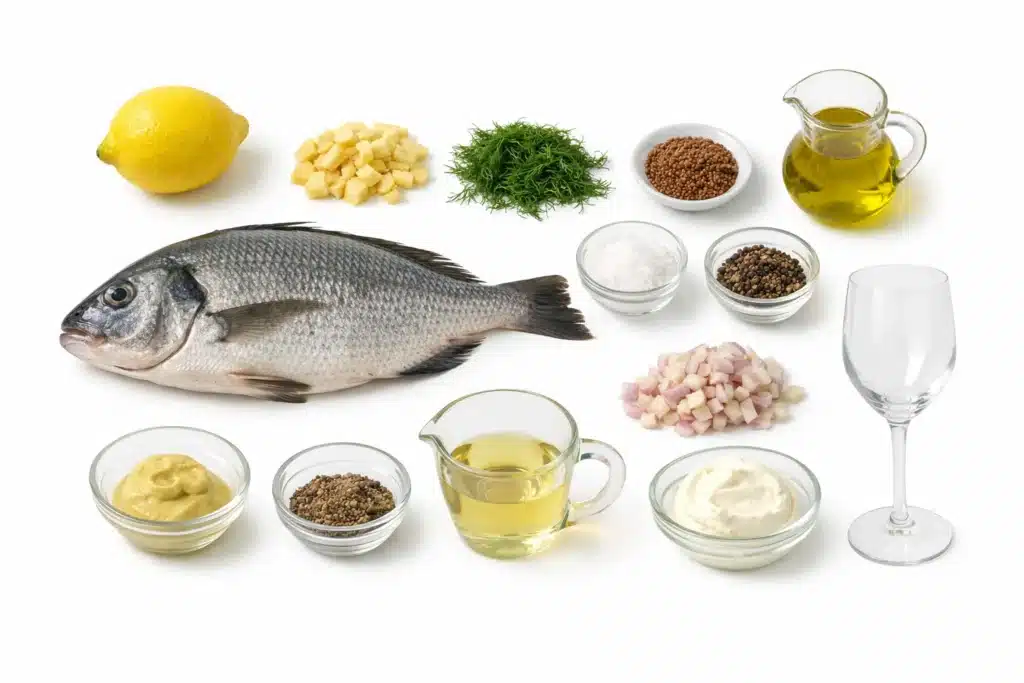
For the Fish:
- 1 whole fish (2 to 2½ lbs), such as porgy, black sea bass, or ocean perch – gutted and scaled
- 1 lemon – halved (half for juicing, half chopped for stuffing)
- 1-inch piece fresh ginger – peeled and finely chopped
- 2 tbsp minced fresh dill – divided
- ¾ tsp brown mustard seeds – adds subtle heat and texture
- Salt and ground black pepper – for seasoning
- 2 tbsp extra-virgin olive oil – divided
For the Sauce:
- 1 shallot – finely chopped
- ½ cup dry white wine – like Sauvignon Blanc or Pinot Grigio
- 1 tbsp Dijon mustard – sharp and tangy
- 2 tbsp crème fraîche – for creaminess and richness
How to Make Slow-Roasted Fish With Mustard and Dill
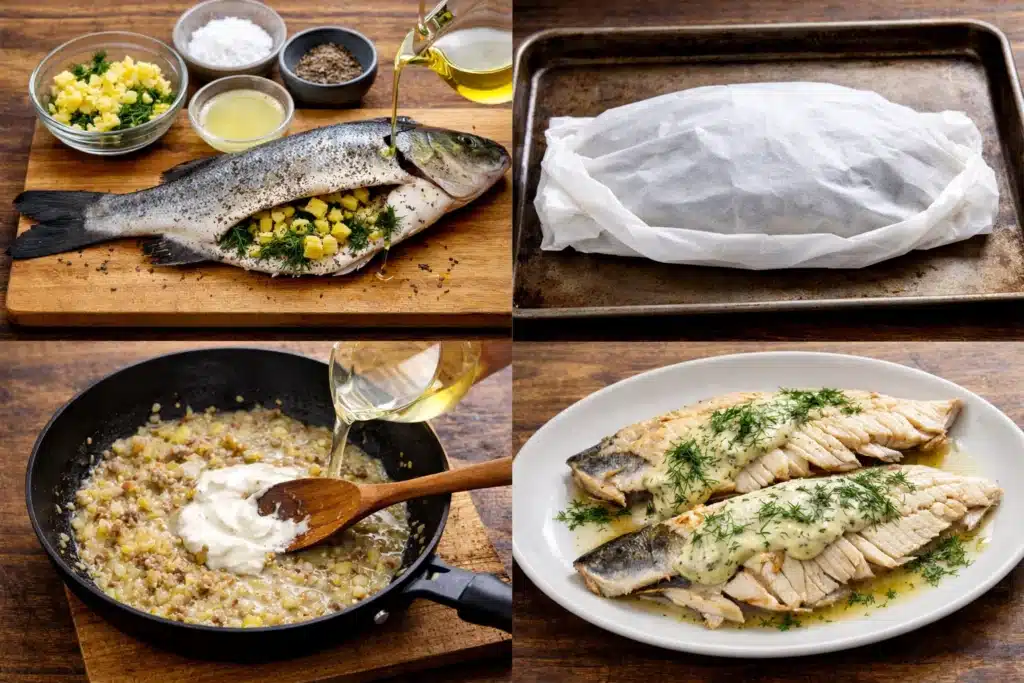
Step 1: Prep the Fish and Aromatics
- Preheat your oven to 200°F (93°C) — the key to gentle roasting.
- Juice half of the lemon and set aside.
- Finely chop the remaining half of the lemon (yes, peel and all).
- In a small bowl, mix half the chopped ginger, half the dill, chopped lemon, and ½ tsp mustard seeds. Season with salt and black pepper.
- Rub the outside of the cleaned fish with 1 tbsp of olive oil.
- Stuff the fish cavity with the ginger-lemon-dill mixture.
Tip: Stuffing the fish with aromatics infuses flavor directly into the flesh as it roasts.
Step 2: Enclose and Roast the Fish
- Cut two large pieces of parchment paper, each about 3 inches larger than the fish on all sides.
- Place the fish on one sheet, then cover it with the second sheet.
- Fold and crimp the parchment edges tightly to create a sealed packet.
- Place the packet, seam-side down, on a baking sheet.
- Roast in the oven for 1 hour, undisturbed.
Why it works: The parchment traps steam, gently cooking the fish while preserving moisture and flavor
Step 3: Make the Mustard-Dill Sauce
- While the fish roasts, heat the remaining 1 tbsp olive oil in a small skillet over low heat.
- Add the remaining ginger and the chopped shallot. Sauté until the shallot is translucent—about 3 minutes.
- Stir in the remaining mustard seeds and cook for 1 minute.
- Add reserved lemon juice and white wine. Simmer gently for 2–3 minutes to reduce slightly.
- Stir in the Dijon mustard and crème fraîche. Simmer for another 2–3 minutes until the sauce thickens slightly.
- Season with salt and pepper, then remove from heat.
Step 4: Plate and Serve
- Carefully remove the roasted fish from the oven and place it on a cutting board, crimped side up.
- Gently peel off the top parchment sheet.
- Use a spatula to lift off the top fillet and transfer to a serving plate.
- Remove and discard the central bones, then transfer the bottom fillet.
- Reheat the sauce gently if needed. Stir in the remaining dill just before serving.
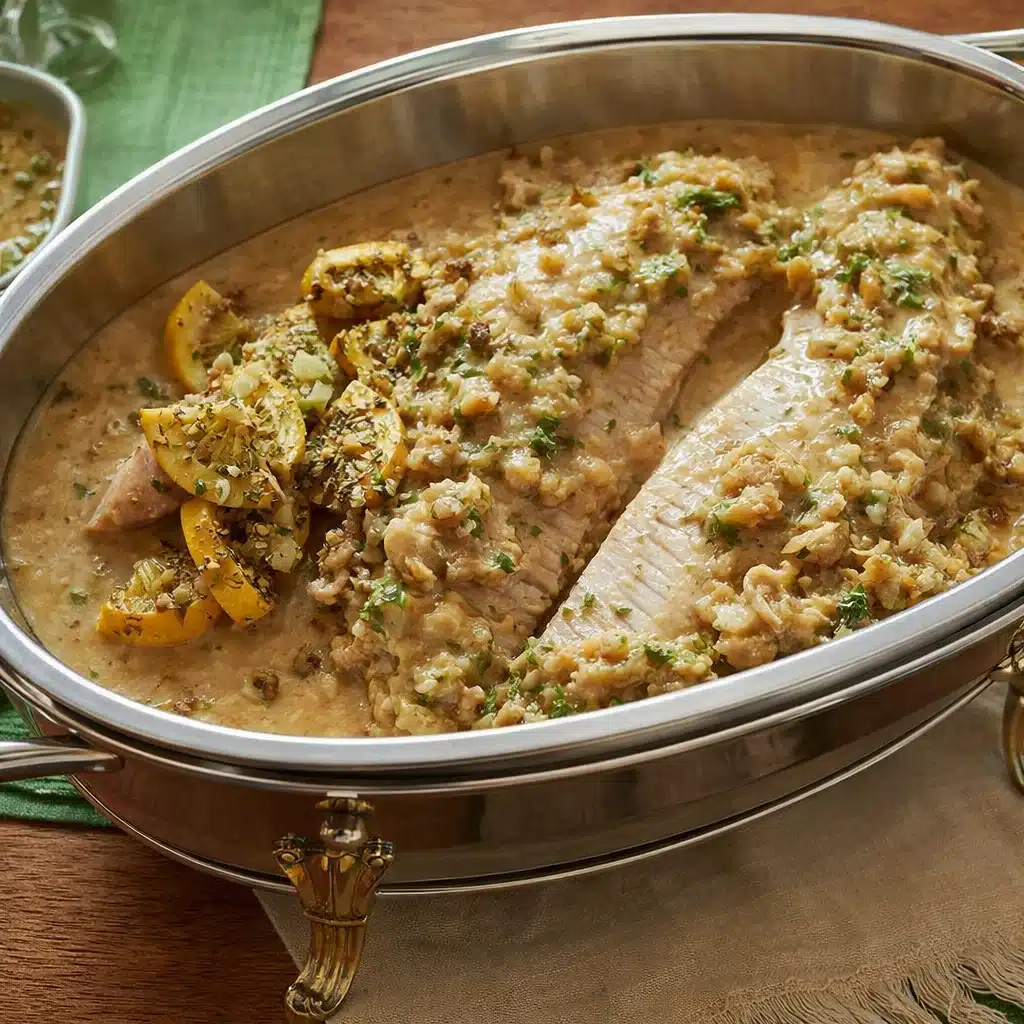
- Spoon the warm mustard-dill sauce over the center of each fillet and serve immediately.
Serving and Storage Tips
Serving Suggestions:
- Serve alongside roasted baby potatoes, steamed green beans, or a fennel-orange salad.
- Garnish with extra fresh dill or lemon zest for a pop of color.
- A chilled glass of white wine or sparkling water with citrus pairs perfectly.
Storage:
- Store leftover fish and sauce separately in airtight containers.
- Best consumed within 2 days.
Reheating:
- Gently reheat the fish in a low oven (275°F) to avoid drying it out.
- Warm the sauce in a saucepan over low heat, adding a splash of water if it thickens too much.
Helpful Notes
- Fish Choice: Any mild white fish works. Ask your fishmonger to clean and scale it for you.
- Don’t Skip the Parchment: It locks in steam and ensures even, gentle cooking.
- Sauce Variation: Replace crème fraîche with heavy cream or Greek yogurt if needed.
- Make It Extra Zesty: Add a dash of white wine vinegar to the sauce for more tang.
- No Mustard Seeds? Try fennel seeds or skip them altogether. The flavor will still shine.
Conclusion
There’s something beautifully simple and comforting about this Slow-Roasted Fish with Mustard and Dill. It’s gentle to cook, hard to mess up, and packed with layers of delicate flavor. The mustard-dill sauce adds a rich, tangy finish that elevates the dish from everyday to elegant.
It’s the kind of meal that impresses without stress — perfect for hosting or savoring on a quiet night in.
Have you tried this recipe? Leave a comment and star rating below to let us know how it turned out!
📌 Don’t forget to share your version on Pinterest or tag us on Instagram — we’d love to see your take.
Did you use a different fish or add a twist to the sauce? Share your version in the comments!
Frequently Asked Questions (FAQ)
Can I use fillets instead of whole fish?
Yes! Use two large fillets and reduce the roasting time to about 25–30 minutes. Still use parchment to trap steam.
How do I make this gluten-free?
This recipe is naturally gluten-free. Just double-check your Dijon mustard and crème fraîche labels to be sure.
Can I freeze leftovers?
It’s not recommended. Cooked fish, especially delicate ones like sea bass or perch, tend to dry out when frozen and reheated.
Why roast at such a low temperature?
Slow-roasting helps retain moisture and enhances the flavor. It’s the secret to ultra-tender, evenly cooked fish.
What if I don’t have crème fraîche?
You can substitute with sour cream or heavy cream. Just avoid boiling the sauce if using sour cream, as it may curdle.