
Sheet-Pan Bibimbap brings all the vibrant colors, bold flavors, and comforting textures of the classic Korean dish into a modern, streamlined format. By roasting everything on a single pan, you get beautifully caramelized vegetables, perfectly cooked rice, and runny-yolk eggs without the fuss. It’s a fast, flavor-packed meal ideal for busy weeknights and satisfying enough to become a regular favorite.
Table of Contents
Table of Contents
Why You’ll Love This Recipe
- Quick and easy — minimal prep and maximum flavor.
- Balanced textures — crisp vegetables, tender rice, rich egg yolk.
- Simple ingredients — easily accessible, no special tools needed.
- Great for meal prep — components store and reheat well.
- Impressive flavors — delivers the essence of bibimbap with an effortless sheet-pan method.
This version stands out for its practicality: each ingredient cooks perfectly thanks to strategic roasting, giving you deep flavor without multiple pans or complicated timing.
Ingredients Needed

Vegetables
- 6 oz oyster mushrooms, torn into bite-size pieces
- 1 medium sweet potato (about 6 oz), thinly sliced into half-moons
- 1 small red onion (about 6 oz), thinly sliced into half-moons
- 3 packed cups chopped Tuscan or curly kale
- 3 tbsp olive oil
- Kosher salt and freshly ground black pepper
Rice and Eggs
- 4 cups cooked medium-grain white rice, preferably cold
- 4 large eggs
For Serving
- 4 tsp toasted sesame oil
- 4 tsp gochujang, plus more to taste
- Optional: kimchi
How to Make Sheet-Pan Bibimbap

Step 1 — Preheat the Oven
Position two racks in the upper and lower thirds of the oven. Preheat to 450°F (230°C) to ensure strong, even roasting.
Step 2 — Roast the Vegetables
Spread the mushrooms, sweet potato, red onion, and kale in separate sections on a large baking sheet.
Drizzle with 3 tablespoons olive oil, season with salt and pepper, and toss each group lightly without mixing them together.
Tip: Give the vegetables plenty of space — this is the key to browning instead of steaming.
Roast on the upper rack for 20 to 25 minutes, until:
- sweet potatoes are tender,
- onions and mushrooms are lightly caramelized,
- kale is crisp but not burnt.
Step 3 — Cook the Rice and Eggs
Place a second baking sheet on the lower rack to heat.
When the vegetables are nearly done, remove the hot sheet and drizzle the remaining 3 tablespoons olive oil over it.
Spread the rice over one half of the sheet.
Crack the eggs onto the other half.
Return to the oven and bake 3 to 6 minutes, just until the whites set and the yolks stay runny.
Step 4 — Assemble and Serve
Divide the rice among four bowls.
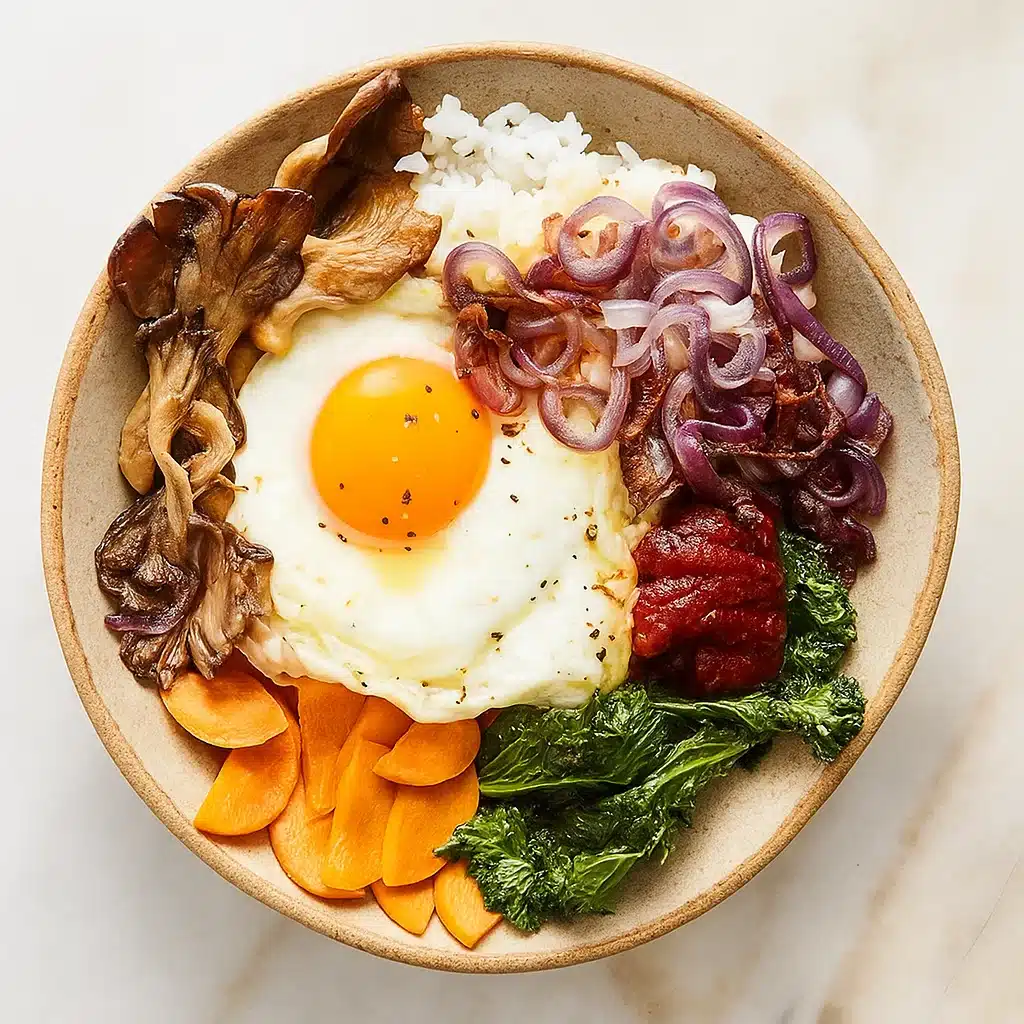
Arrange the roasted vegetables on top in separate sections.
Slide an egg into each bowl.
Finish with 1 teaspoon sesame oil and 1 teaspoon gochujang per serving.
Mix everything together before eating. Serve with kimchi if desired.
Serving and Storage Tips
- Make it beautiful: Keep the components separated when plating for a traditional bibimbap look.
- Boost flavor: Add sesame seeds, sliced scallions, or crushed nori.
- Storage:
- Refrigerate components (except eggs) for up to 3 days.
- Reheat in the oven at 350°F (175°C) to maintain crispness.
- Cook fresh eggs when reheating for best results.
Helpful Notes
- Swap vegetables based on season or preference — broccoli, zucchini, and carrots work wonderfully.
- Brown rice or quinoa makes a great alternative base.
- For more protein, add tofu, chicken, or sautéed ground beef.
- Adjust gochujang depending on spice tolerance.
Conclusion
This Sheet-Pan Bibimbap delivers a satisfying, flavor-rich meal with minimal effort and maximum payoff. With its colorful vegetables, comforting rice, and luscious egg yolk, it’s a dish that feels both nourishing and indulgent.
If you try this recipe, leave a comment and a star rating — your feedback is always appreciated!
Share your creation on Pinterest or Facebook, and tell me: Which vegetable combination did you love most?
Frequently Asked Questions (FAQ)
Can I change the vegetables?
Yes, most vegetables roast well — just slice them evenly for even cooking.
How do I make this gluten-free?
The recipe is naturally gluten-free as long as your gochujang is labeled gluten-free.
Can I use brown rice?
Absolutely. Make sure it’s fully cooked and cooled before roasting.
Can I freeze this dish?
You can freeze the vegetables and rice, but prepare fresh eggs when serving.
Why didn’t my rice crisp?
Your baking sheet might not have been hot enough. Preheating is essential.
Can I fully cook the eggs?
Yes — simply bake a few extra minutes until the yolks reach your preferred consistency.

Sheet-Pan Bibimbap
Ingredients
Method
- Preheat the oven to 450°F (230°C) with racks positioned in the upper and lower thirds.
- Spread mushrooms, sweet potato, red onion, and kale in separate sections on a large baking sheet. Drizzle with 3 tablespoons olive oil, season with salt and pepper, and toss each group lightly.
- Roast vegetables on the upper rack for 20–25 minutes, until sweet potatoes are tender, onions and mushrooms are lightly caramelized, and kale is crisp.
- Place a second baking sheet on the lower rack to heat. When vegetables are nearly done, remove the hot sheet and drizzle with the remaining 3 tablespoons olive oil.
- Spread the rice over one half of the hot sheet. Crack the eggs onto the other half. Bake 3–6 minutes, until whites are set but yolks remain runny.
- Divide rice among four bowls. Add roasted vegetables, top with an egg, and finish each bowl with 1 teaspoon sesame oil and 1 teaspoon gochujang. Serve with kimchi if desired.