
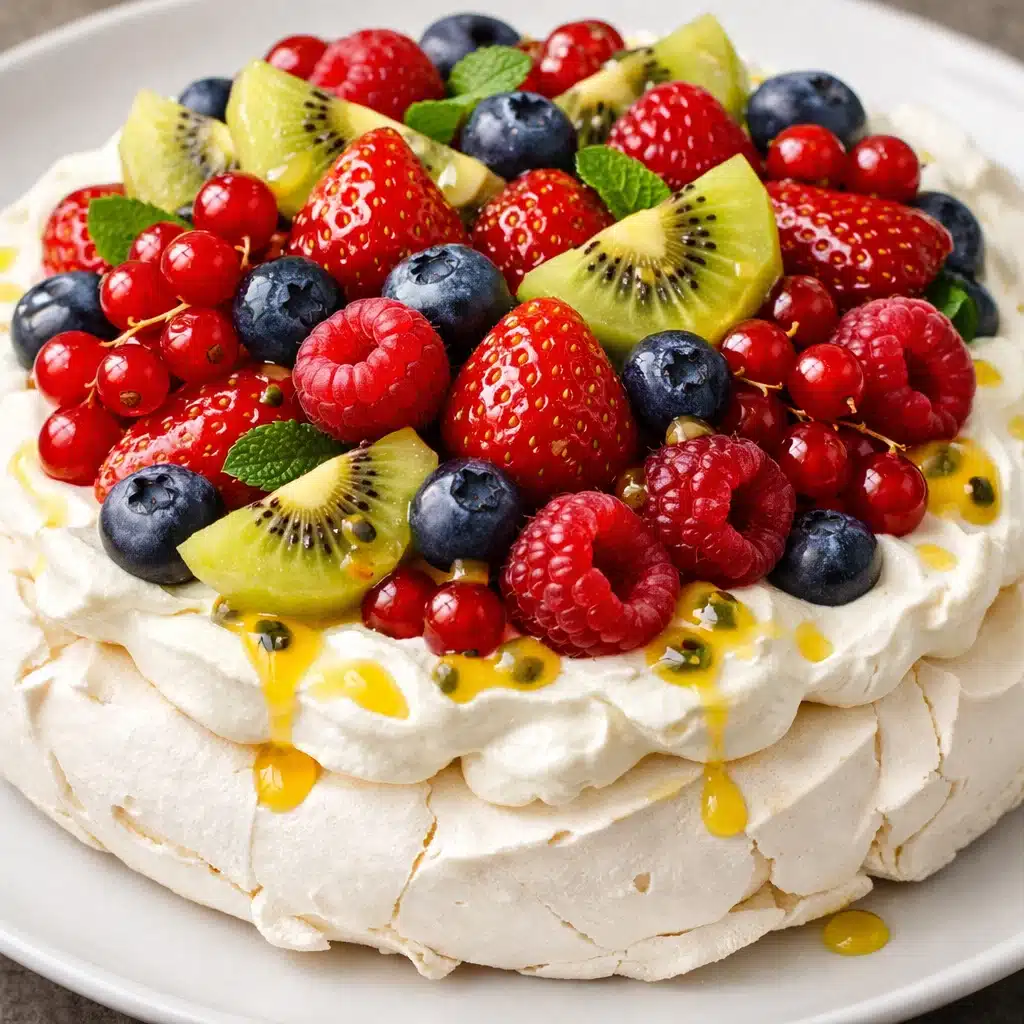
A perfect Pavlova Recipe is crisp on the outside, soft and marshmallowy inside, and topped with clouds of cream and fresh, juicy fruit. If you’re searching for a show-stopping dessert that looks elegant but is surprisingly simple to make, this Pavlova gives you everything you need.
This recipe takes a classic favorite and turns it into something even more magical. With clear steps, a few pro tips, and everyday ingredients, you’ll create a beautiful Pavlova that melts in your mouth, impresses anyone who sees it, and feels like pure celebration on a plate.
Table of Contents
Table of Contents
Why You’ll Love This Recipe
- Light & Stunning: Crisp shell + fluffy center = the best texture combination ever.
- Simple Ingredients: Just eggs, sugar, cream, and fruit—no fancy tools.
- Perfect for Any Occasion: Ideal for holidays, birthdays, dinner parties, or summer gatherings.
- Reliable Technique: This method avoids common mistakes like cracking or weeping.
- Crowd-Pleaser: Guests always think it’s harder than it really is.
- Customizable: Top it with any fruit, curd, or flavored cream you love.
What makes this Pavlova stand out is the attention to detail—tiny steps that create a stable structure, glossy finish, and the perfect marshmallow center. It’s a dessert that feels special, comforting, and undeniably impressive.
Ingredients Needed

For the Pavlova Base
- 150 ml / 5 oz egg whites (4–5 cold eggs; measure after separating)
- 1 cup caster sugar (superfine sugar for best dissolving)
- 1 tbsp cornstarch, sifted
- 1 tsp white vinegar (helps stabilize the meringue)
For the Whipped Cream
- 1 1/2 cups heavy/whipping cream (cold)
- 1/4 cup caster sugar
- 1 tsp vanilla extract (or vanilla bean/essence)
For the Topping
- Fresh fruit of your choice
- berries (raspberries, blueberries, strawberries)
- cherries
- kiwis, mango, or passionfruit also work beautifully
Feel free to mix your favorites—bright, slightly tart fruits pair best with the sweet Pavlova.
How to Make Pavlova

1. Prepare your eggs.
Separate the egg whites from the yolks while the eggs are still cold—this makes separating easier. Measure out 150 ml of whites (anywhere between 140–160 ml is fine). Let them sit at room temperature for 20–30 minutes. Room-temperature egg whites whip better and give greater volume.
2. Preheat the oven.
Set your oven to 170°C / 340°F (or 180°C fan). Preheating ensures the Pavlova starts cooking immediately and forms that signature crisp shell.
3. Start whipping the egg whites.
Add the whites to a clean, dry mixing bowl. Using a stand mixer (speed 7) or a handheld mixer (high speed), beat until soft peaks form—meaning the peaks curl gently when the whisk is lifted.
4. Slowly add the sugar.
Add 1 tablespoon of sugar at a time, allowing it to dissolve before adding the next spoonful. This slow process helps the meringue become glossy and stable.
5. Beat until glossy and smooth.
Keep mixing for about 3 minutes after all the sugar is added. To test if it’s ready, rub a tiny bit between your fingers—there should be no grainy sugar left.
6. Add stabilizers.
Sprinkle in the sifted cornstarch and add the vinegar. Mix on low speed for just 5–7 seconds, or fold gently with a spatula. These ingredients help the Pavlova stay marshmallowy inside and hold its shape.
Shape the Pavlova
7. Prepare the baking surface.
Take the base of a 24 cm (9.5″) springform cake pan and turn it upside down. Put a dab of meringue on the underside to help the parchment paper stick.
8. Add the meringue.
Scoop half the meringue onto the lined base. Use the pan as a loose guide to shape it into a 20 cm / 8-inch circle.
9. Build the dome.
Add the remaining meringue on top and gently sculpt it into a tall, soft dome. The edges should slope inward slightly, and the top should be flattened a bit. Aim for a height of 4–5 cm (about 2 inches). Don’t worry if it doesn’t look perfect—it expands as it bakes.
10. Transfer to the tray.
Slide the cake base onto a baking sheet. Move gently so the structure stays intact.
Bake the Pavlova
11. Reduce the heat.
Place the Pavlova in the oven and immediately lower the temperature to 115°C / 240°F (100°C fan). This slow, low baking prevents cracking.
12. Bake without opening the door.
Let it bake for 1 1/2 hours. Avoid opening the oven—sudden temperature changes can collapse the shell.
13. Cool slowly.
Turn the oven off after baking but leave the Pavlova inside overnight or up to 18 hours. Slow cooling keeps it from shrinking or cracking.
Finish and Serve
14. Move to a serving plate.
Carefully lift the Pavlova onto your serving dish. Slide out the cake base and gently pull away the parchment.
15. Make the whipped cream.
Beat the cream, sugar, and vanilla until it’s smooth, thick, and forms soft peaks. Avoid over-whipping—it should look silky, not stiff.
16. Decorate.
Spoon the cream over the top and add your favorite fruits just before serving.
17. Serve and enjoy!
Your Pavlova is ready to shine. Light, airy, sweet, and absolutely beautiful.

Serving and Storage Tips
- Serve immediately after adding fruit to keep the shell crisp.
- Add toppings right before serving so the moisture doesn’t soften the Pavlova.
- Store undecorated Pavlova in an airtight container for up to 2 days.
- Once topped with cream, it’s best eaten within 3–4 hours.
- Leftovers can be chilled but will become softer—the flavor is still delicious.
Helpful Notes
- Use fresh eggs, not carton eggs—they whip better.
- Make sure the bowl and beaters are completely clean; fat prevents whipping.
- Caster sugar works best because it dissolves faster.
- Humidity can affect results; on very humid days, the shell may soften slightly.
- Add lemon zest, passionfruit pulp, or flavored cream for delicious variations.
Conclusion
This Pavlova recipe delivers everything you want in a dessert—light, elegant, and incredibly satisfying. With a crisp outer shell and a pillowy center, it’s a dessert that looks fancy but is achievable for any home cook. Whether you’re making it for a celebration or just to impress your family, this Pavlova will quickly become a favorite.
If you try this recipe, leave a comment and a star rating below—I’d love to hear how yours turned out!
And don’t forget to share it on Pinterest or Facebook so others can enjoy it too.
What fruit combo did you choose for your Pavlova? Tell us in the comments!
Frequently Asked Questions (FAQ)
Why did my Pavlova crack?
Cracking usually happens from rapid temperature changes. Be sure to cool it slowly in the oven after baking.
Can I make Pavlova ahead of time?
Yes! Bake it the day before and store it (undecorated) in an airtight container.
Can I use powdered sugar instead of caster sugar?
It isn’t recommended—powdered sugar contains cornstarch, which can change the texture.
Why is my Pavlova weeping or sticky?
This can happen if the sugar didn’t dissolve fully or if the Pavlova was baked on a humid day.
Can I make it gluten-free?
Absolutely! Pavlova is naturally gluten-free.
What’s the best fruit to use?
Tart fruits—berries, kiwi, cherries, and passionfruit—balance the sweetness perfectly.
Can I freeze Pavlova?
Freezing is not recommended; it will collapse when thawing.

Perfect Pavlova
Ingredients
Equipment
Method
- Separate cold eggs and measure 150 ml of egg whites. Let them rest at room temperature for 20–30 minutes to whip better.
- Preheat oven to 170°C / 340°F (180°C fan). Proper preheating helps form a crisp shell.
- Beat the egg whites on high speed until soft peaks form.
- Add the sugar 1 tablespoon at a time, beating until fully dissolved and glossy.
- Beat for 3 minutes after all sugar is added. Fold in cornstarch and vinegar gently.
- Turn the base of a 24 cm springform pan upside down, stick parchment paper with a dab of meringue, and use it as a guide.
- Spread half the meringue into a 20 cm circle, then add the rest to create a dome about 4–5 cm high.
- Transfer the shaped Pavlova onto a baking tray carefully.
- Place Pavlova in the oven and immediately reduce temperature to 115°C / 240°F (100°C fan). Bake for 1 1/2 hours without opening the door.
- Turn off the oven and cool the Pavlova inside overnight or up to 18 hours.
- Carefully lift Pavlova onto a serving plate and remove parchment.
- Whip cream, sugar, and vanilla until soft peaks form.
- Top Pavlova with whipped cream and fresh fruit just before serving.
- Serve immediately and enjoy the crisp shell and marshmallow center.