
When it comes to roasting a turkey that’s both tender inside and beautifully crisp outside, a Dry-Brined Turkey is the secret weapon. Unlike the traditional wet brine, this simple dry-brining technique draws out and reabsorbs the bird’s natural juices, creating deep flavor without the mess.
Whether it’s Thanksgiving, Christmas dinner, or a special weekend feast, this recipe guarantees a moist, flavorful turkey every time — no buckets of brine required, just a little salt, time, and patience for incredible results.
Table of Contents
Table of Contents
Why You’ll Love This Recipe
- Effortless yet impressive: Just salt, rest, and roast – the brine does the work for you.
- Juicy & flavorful: Every bite bursts with moisture and seasoning throughout the meat.
- Crispy golden skin: The dry brine helps achieve that irresistible crackly finish.
- Perfect for the holidays: A centerpiece that wows family and guests alike.
- No messy liquid brine: Save fridge space and skip the water bath.
This method stands out because it enhances flavor naturally and produces consistent results, making even first-time turkey roasters feel like pros.
Ingredients Needed
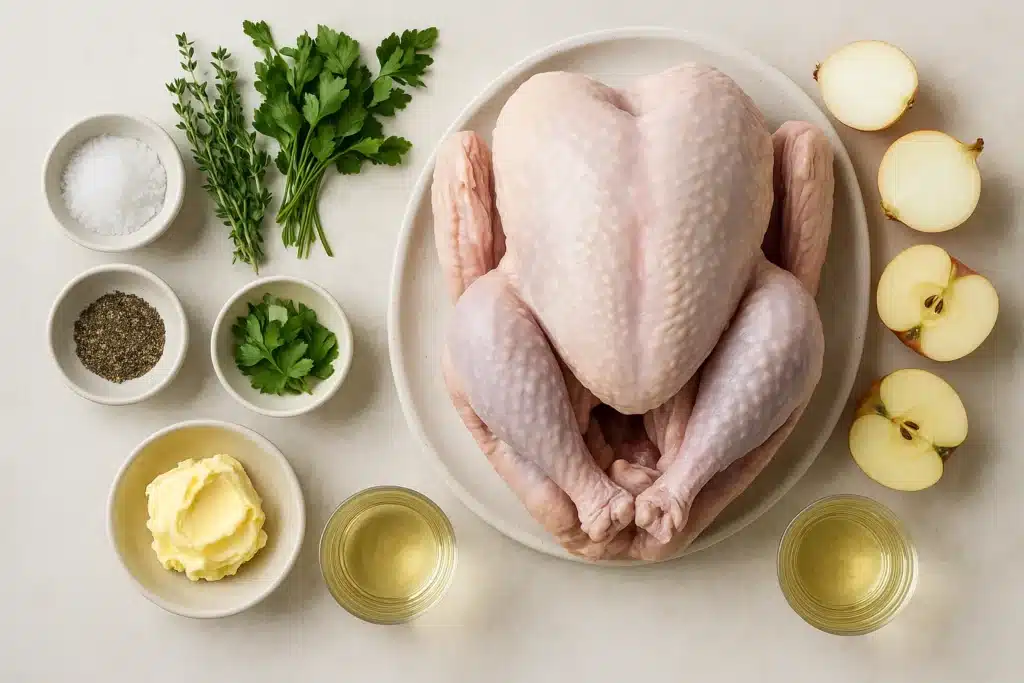
For the Turkey
- 1 whole turkey (12 – 16 lb), preferably heritage or pasture-raised
- Kosher salt (about 1 Tbsp per 4 lb of turkey)
- 1 Tbsp freshly ground black pepper
For the Aromatics
- 10 sprigs fresh thyme
- ½ bunch flat-leaf parsley
- 2 small onions, halved
- 2 small apples, cored and halved
For Roasting
- ½ cup unsalted butter, softened
- 2 cups dry white wine (or substitute low-sodium chicken broth)
How to Make Dry-Brined Turkey
Step 1 – Prepare the Turkey (2 days before serving)
Pat the turkey dry inside and out with paper towels. Sprinkle kosher salt generously over the skin, under the skin where possible, and inside the cavity. Use roughly 1 tablespoon of salt per 4 pounds of bird. The salt will draw out moisture, then reabsorb it to season the meat deeply.
Step 2 – Refrigerate and Rest
Place the turkey in a large food-safe plastic bag or loosely cover it on a baking sheet. Refrigerate for 2 days, flipping the turkey over on the second night to brine evenly. A few hours before roasting, remove it from the bag, pat dry again, and let it sit at room temperature.
No need to rinse — this keeps the skin dry for perfect crisping.
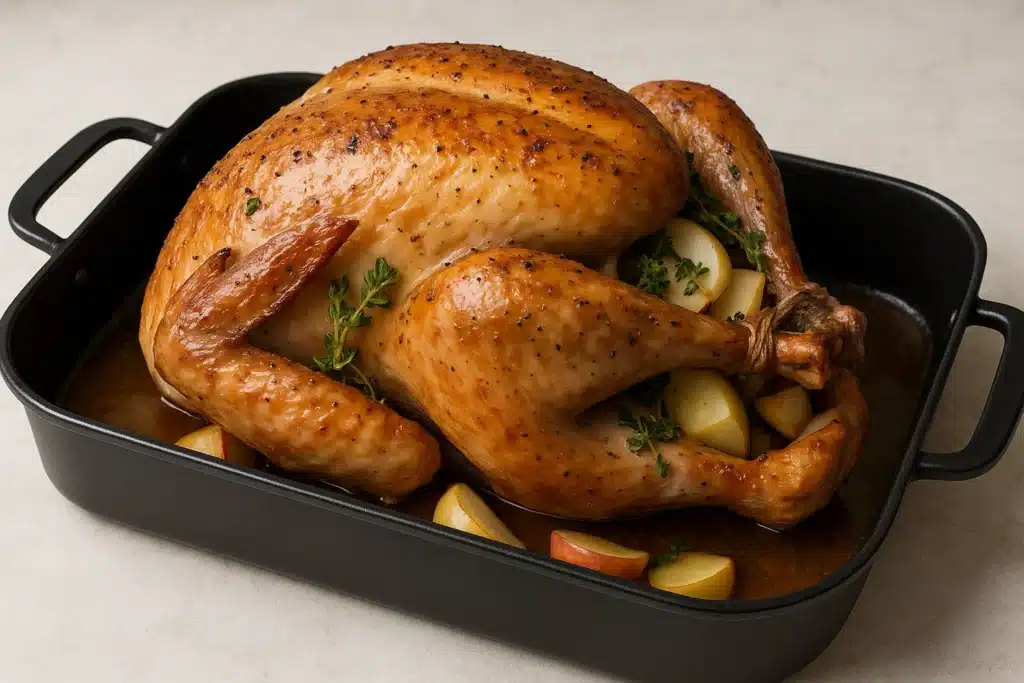
Step 3 – Stuff and Season
Preheat the oven to 450 °F (230 °C).
Season the cavity with half the black pepper. Stuff in the thyme, parsley, half of the onions, and half of the apples. Tie the legs loosely with kitchen twine. Fill the neck cavity with the remaining apples and onions, then tuck the neck skin under.
Step 4 – Butter and Pepper
Carefully loosen the skin over the breast and thighs. Spread softened butter underneath and rub more over the top of the skin. Sprinkle the remaining pepper evenly over the entire bird for extra flavor and color.
Step 5 – Roast High and Then Slow
Roast at 450 °F for 30 minutes to crisp the skin. Then reduce the oven temperature to 350 °F (175 °C), cover the breast and wing tips with foil, and pour 1½ cups of white wine (or water) into the roasting pan.
Continue roasting until the internal temperature in the thigh reaches about 160 °F, approximately 12 minutes per pound for an unstuffed bird. Remove the foil during the last 30 minutes so the skin browns beautifully.
Step 6 – Check for Doneness
Start checking after 2 hours. Insert an instant-read thermometer into the thickest part of the thigh without touching the bone. When it reads 160 °F, it’s ready — carryover heat will finish the cooking.
Step 7 – Rest the Turkey
Once done, carefully tilt the turkey to let the juices run into the pan. Transfer the bird to a platter or baking sheet, cover it with foil and a damp towel, and let it rest at least 30 minutes. This crucial step locks in juiciness before carving.
Step 8 – Make Pan Drippings for Gravy (optional)
Pour the fat and drippings into a heat-proof measuring cup. Deglaze the roasting pan with ½ cup of white wine (or broth), scraping up browned bits, then pour this liquid into the cup. Separate the fat and juices – use both to make a rich gravy.
Serving and Storage Tips
Serving
- Slice the turkey across the grain for tender bites.
- Serve with classic sides like mashed potatoes, cranberry sauce, or roasted vegetables.
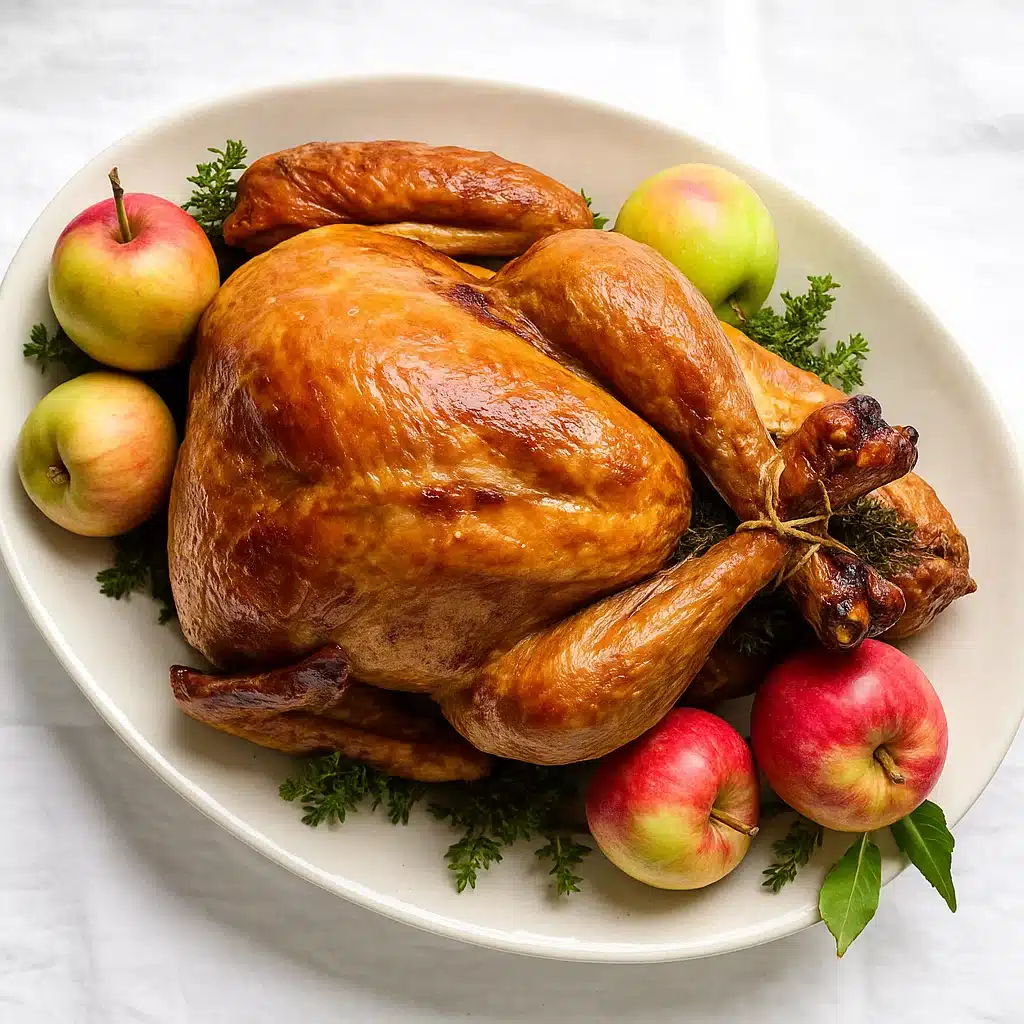
- Garnish the platter with fresh herbs and citrus slices for a festive touch.
Storage
- Refrigerate: Store leftovers in airtight containers for 3–4 days.
- Freeze: Wrap tightly and freeze for up to 3 months.
- Reheat: Warm gently in the oven at 325 °F until heated through, covered with foil to prevent drying.
Helpful Notes
- Timing is key: Start the brine at least 2 days ahead for best results.
- Don’t skip the rest: Resting allows the juices to redistribute – skip this, and you’ll lose moisture.
- Add flavor twists: Try adding crushed garlic, citrus zest, or sage to the butter for a custom touch.
- Wine swap: Replace white wine with apple cider or broth for a non-alcoholic option.
Conclusion
This Dry-Brined Turkey recipe delivers everything you dream of in a holiday bird – crispy golden skin, juicy tender meat, and unforgettable flavor. The simple dry-brine method works like magic, enhancing taste and texture with minimal effort.
If you try this recipe, leave a comment and a ⭐⭐⭐⭐⭐ rating below! I’d love to hear how it turned out – did you add your own twist or keep it classic?
Don’t forget to share your turkey masterpiece on Pinterest or Facebook to inspire others! 🦃✨
Frequently Asked Questions (FAQ)
Can I dry-brine a frozen turkey?
The turkey must be fully thawed before brining. A frozen bird won’t absorb salt evenly.
How far in advance can I dry-brine a turkey?
You can start the dry brine up to 3 days ahead. Any longer, and the texture can become slightly firm.
Do I need to rinse the turkey after brining?
No – simply pat it dry. Rinsing can make the skin soggy and wash away flavor.
What if I don’t have white wine?
Use chicken broth, apple juice, or water instead – the steam keeps the turkey moist during roasting.
Can I use this method for chicken or duck?
Absolutely! The dry brine works for any poultry – just adjust the brining time based on weight.
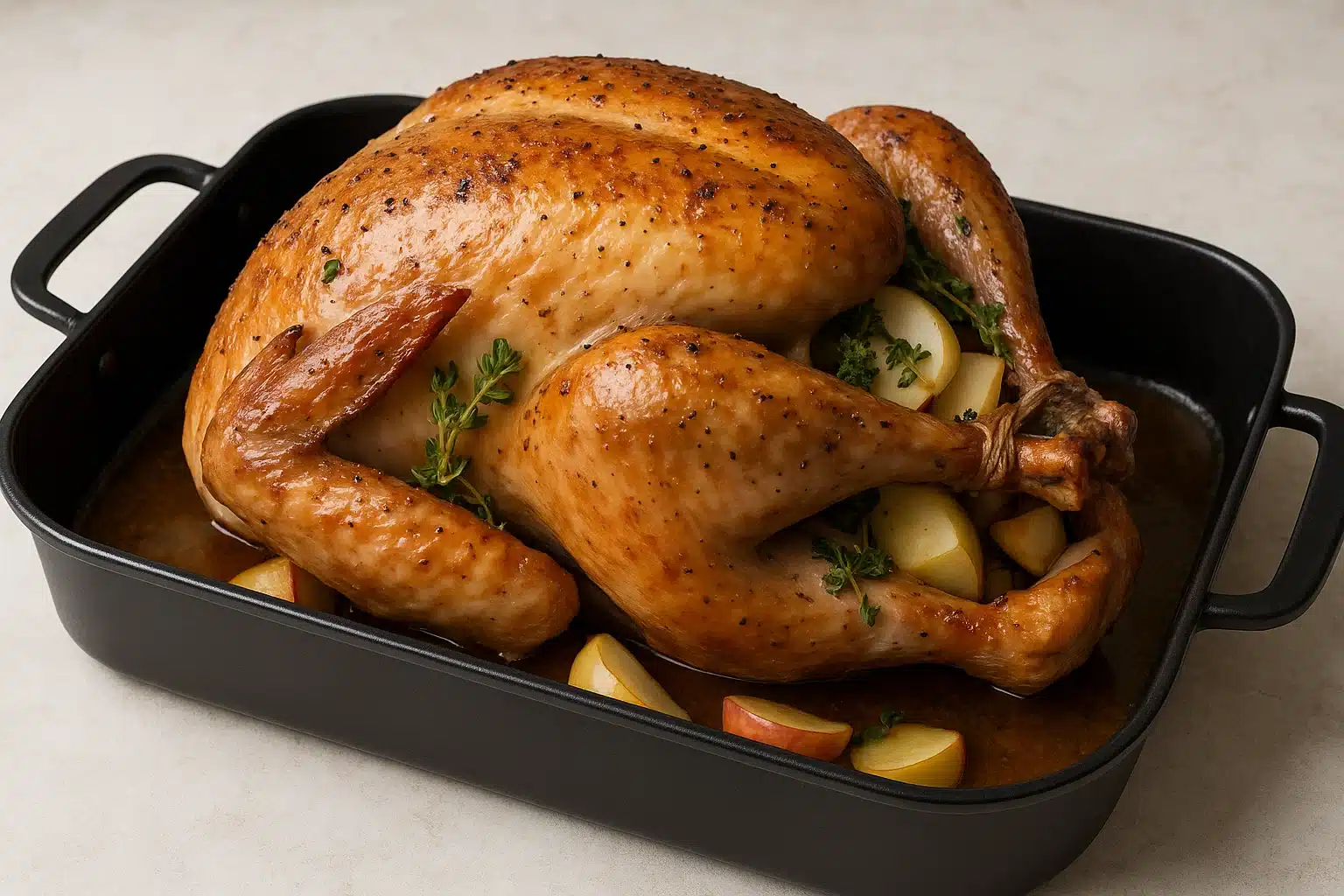

Dry-Brined Turkey
Ingredients
Method
- Step 1 – Prepare the Turkey (2 days before serving) — Pat the turkey dry inside and out with paper towels. Sprinkle kosher salt generously over the skin, under the skin where possible, and inside the cavity. Use roughly 1 tablespoon of salt per 4 pounds of bird.
- Step 2 – Refrigerate and Rest — Place the turkey in a large food-safe plastic bag or loosely covered on a tray. Refrigerate for 2 days, flipping on the second night. Before roasting, remove from fridge, pat dry, and let sit at room temperature for a few hours. Do not rinse.
- Step 3 – Stuff and Season — Preheat oven to 230°C / 450°F. Season the cavity with half the pepper. Stuff with thyme, parsley, half the onions, and half the apples. Tie legs loosely and tuck in neck skin with remaining apples and onions.
- Step 4 – Butter and Pepper — Loosen the skin over the breast and thighs, spreading softened butter underneath and over the surface. Sprinkle the remaining pepper evenly over the entire bird.
- Step 5 – Roast High and Then Slow — Roast at 230°C / 450°F for 30 minutes. Then reduce oven to 175°C / 350°F, cover breast and wings with foil, and pour 360 ml (1½ cups) chicken broth into the roasting pan. Continue roasting until internal temperature reaches 71°C / 160°F, about 12 minutes per pound. Remove foil for the final 30 minutes to brown.
- Step 6 – Check for Doneness — Begin checking after 2 hours. Use a thermometer in the thickest part of the thigh; when it reads 71°C / 160°F, the turkey is done. Carryover heat will complete cooking.
- Step 7 – Rest the Turkey — Tilt turkey to release juices into the pan. Transfer to a platter, cover with foil and a damp towel, and rest at least 30 minutes before carving.
- Step 8 – Make Pan Drippings for Gravy (optional) — Pour fat and drippings into a heatproof cup. Deglaze the roasting pan with 120 ml (½ cup) broth, scraping browned bits. Combine and separate fat for use in gravy.