
If you’ve only ever tasted store-bought mayo, you’re in for a game-changer. Homemade mayonnaise is not only ridiculously easy to make, but the flavor is rich, fresh, and far superior to anything in a jar. Whether you want a silky spread for your sandwiches or a luscious base for dressings and dips, this quick recipe delivers in under 10 minutes with ingredients you likely already have on hand. Say goodbye to artificial preservatives — this is real mayonnaise, made from scratch, the way it should be.
Table of Contents
Table of Contents
Why You’ll Love This Recipe
- Quick & Easy – Ready in less than 10 minutes with just 6 ingredients.
- No Special Equipment Needed – Use a food processor, immersion blender, or even a whisk (with a little effort).
- Incredibly Creamy Texture – Silky smooth and spreads like a dream.
- Customizable Flavor – Add garlic, herbs, or spices to make it your own.
- Better Than Store-Bought – No additives, just fresh, clean taste.
Once you try this version, you’ll never go back. It’s a kitchen staple you’ll love whipping up over and over again.
INGREDIENTS NEEDED
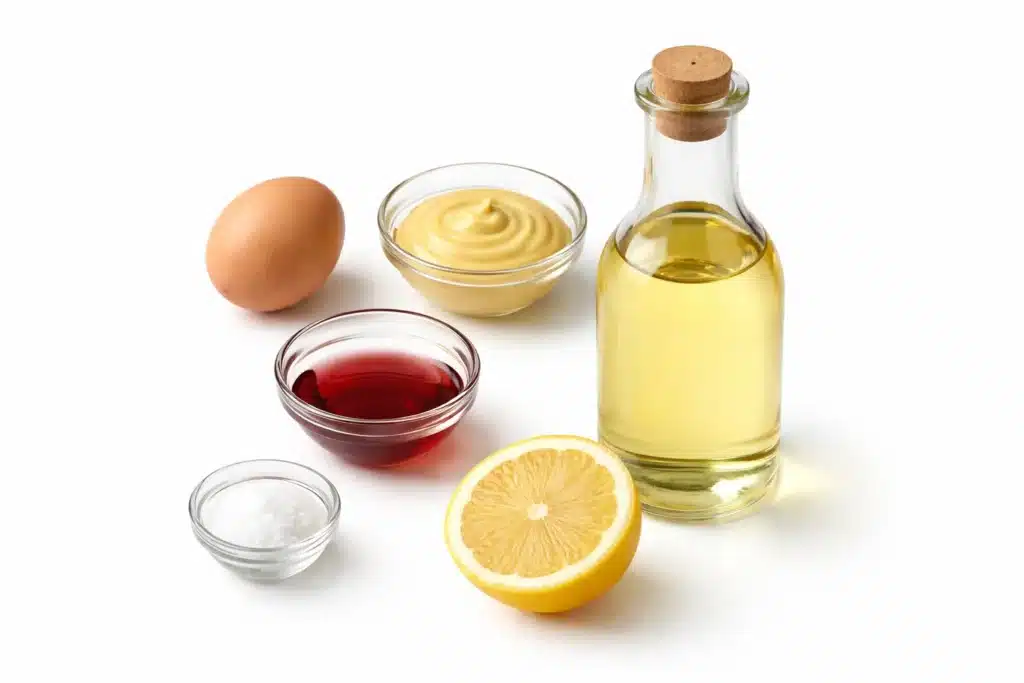
Here’s everything you need for your perfect homemade mayonnaise. These ingredients are pantry staples, and the result is far more flavorful than any jarred alternative.
For the base:
- 1 large egg – Room temperature is best for proper emulsification.
- 1 tablespoon Dijon mustard – Adds flavor and helps stabilize the emulsion.
- 1 tablespoon red wine vinegar or white wine vinegar – Brings balanced acidity.
- 1/4 teaspoon fine sea salt – Or more to taste.
- 1 cup (240ml) safflower oil or vegetable oil – Neutral oils work best.
- 1 teaspoon fresh lemon juice (optional) – Brightens the flavor, added at the end.
✅ Pro Tip: Use neutral-flavored oil for classic mayo. For a more robust taste, try blending in a small amount of olive oil.
HOW TO MAKE HOMEMADE MAYONNAISE
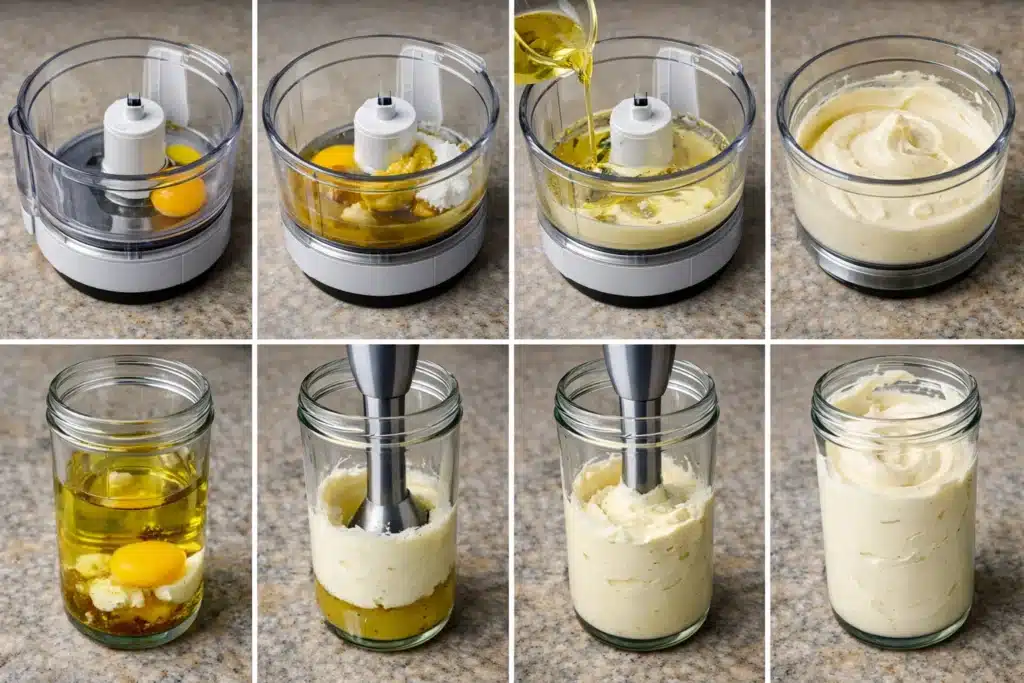
Prepare Your Equipment
- Use a food processor’s small bowl attachment if available. It’s designed for smaller volumes and ensures the blade fully engages with the ingredients.
- No small bowl? Use an immersion blender instead (method below). Alternatively, you can double the recipe for better emulsification in larger bowls.
Method 1: Food Processor
- Start with the egg. Add it to the processor bowl and blend for 20 seconds to break it down.
- Add flavor builders. Toss in the mustard, vinegar, and salt. Blend again for 20 seconds until fully mixed.
- Time for oil – go slow! With the motor running, drizzle the oil in drop by drop for the first 1/4 cup. This slow start is essential for forming a stable emulsion.
- Once thickened, increase the oil flow. Gradually pour the remaining oil in a thin, steady stream while the processor runs. The mixture should turn creamy and white.
- Scrape & finish. Scrape down the bowl and blend an additional 10 seconds. Taste and adjust with salt or lemon juice as desired.
Method 2: Immersion Blender (Fail-Proof!)
- Use a tall jar. Combine the egg, mustard, vinegar, salt, and optional lemon juice at the bottom.
- Pour oil on top. Do not mix yet — layering is important.
- Blend from the bottom up. Insert the immersion blender, pressing it firmly to the bottom. Turn it on high and watch as the bottom layer turns white and thick.
- Lift slowly. Once the bottom is fully emulsified, begin lifting and pulsing gently to incorporate all the oil.
- Adjust seasoning. Taste and tweak with salt, more vinegar, or lemon juice as needed.
⚠️ Troubleshooting tip: If your mayo doesn’t thicken, it’s usually due to too much oil too fast or cold ingredients. Let the egg come to room temperature and try again with slower oil addition.
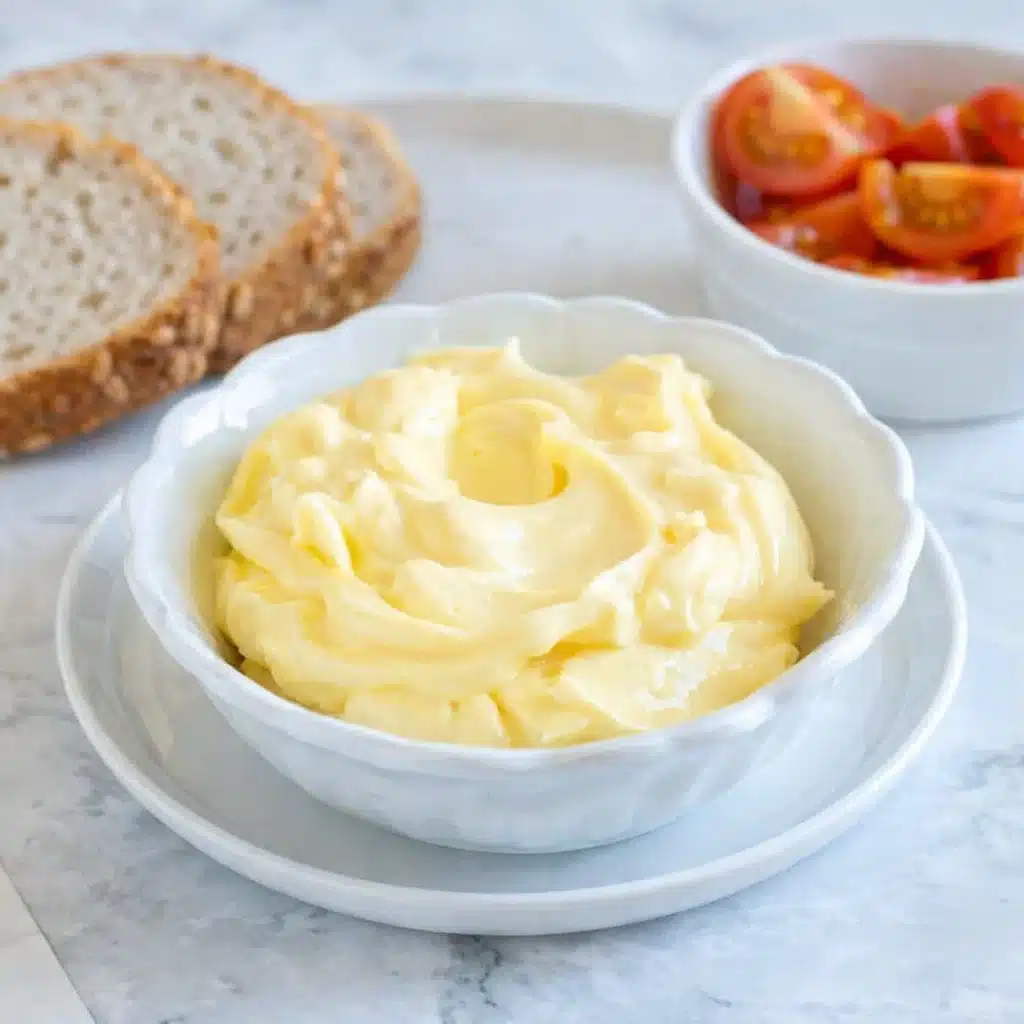
SERVING AND STORAGE TIPS
- Serve immediately as a dip, spread, or dressing base.
- Use it in:
- Chicken or egg salad
- Sandwiches and wraps
- Burger buns
- Tuna salad
- Potato salad
Storage Instructions:
- Refrigerator: Store in a clean, airtight container for up to 1 week.
- Avoid freezing: Mayo does not freeze well — the emulsion will break.
🧊 Always use a clean spoon to prevent contamination and preserve freshness.
HELPFUL NOTES
- Oil temperature matters. Room temperature ingredients blend more easily.
- Customize it. Add minced garlic for aioli, chopped herbs for a green mayo, or sriracha for heat.
- Too thick? Add 1–2 teaspoons of warm water and blend briefly.
- Too runny? Add a second egg yolk and blend again slowly.
- Want eggless mayo? Use aquafaba (liquid from canned chickpeas) as a substitute — the technique remains nearly the same.
💡 Experiment with half olive oil + half neutral oil for a deeper flavor without bitterness.
CONCLUSION
This homemade mayonnaise recipe is the ultimate kitchen secret — fast, foolproof, and better than any jar. With just a few ingredients and a blender (or even a whisk!), you can create a creamy, luscious mayo that upgrades every dish it touches.
Have you tried this recipe? Leave a comment and a 5-star rating below — it helps others find this recipe and supports this site!
💬 What’s your favorite flavor add-in — garlic, chipotle, or fresh herbs? Share your twist below!
And don’t forget to share this on Pinterest or Facebook with friends who love fresh, homemade flavor.
Frequently Asked Questions (FAQ)
Can I use olive oil for homemade mayonnaise?
Yes, but use light olive oil or blend it with a neutral oil. Extra virgin olive oil alone may create a bitter taste or overly thick texture.
Why did my mayonnaise not thicken?
Usually, the oil was added too quickly or the ingredients were too cold. Ensure the egg is at room temperature and drizzle the oil slowly, especially at the beginning.
How long does homemade mayo last in the fridge?
It stays fresh for up to 1 week when stored in an airtight container. Always refrigerate immediately and use a clean spoon every time.
Is homemade mayonnaise safe with raw eggs?
If you’re concerned, use pasteurized eggs or a pasteurized egg product. You can also find eggs labeled safe for raw consumption in most stores.
Can I freeze homemade mayonnaise?
No, freezing breaks the emulsion and causes the mayo to separate. Stick to refrigeration and make smaller batches if needed.
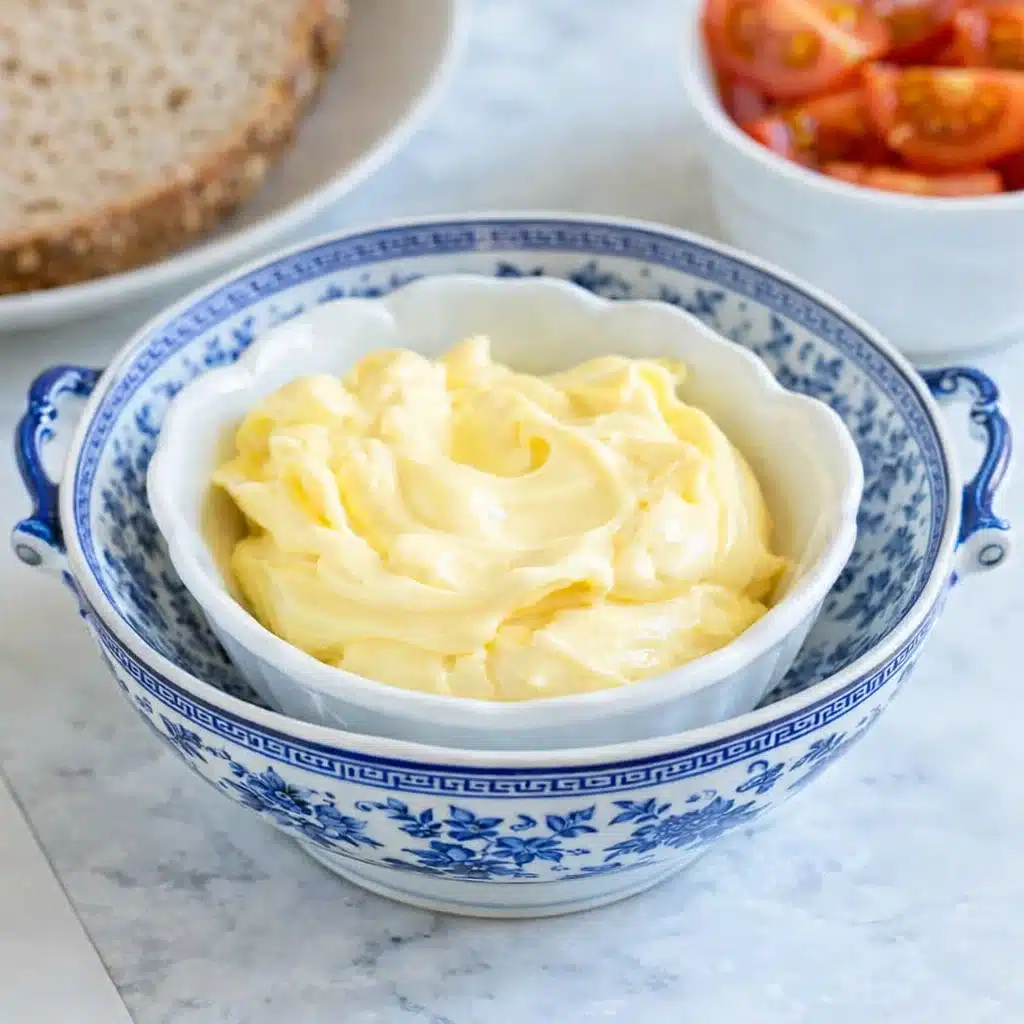

Easy Homemade Mayonnaise
Ingredients
Method
- Add the egg to a small food processor bowl and blend for about 20 seconds until broken down.
- Add the Dijon mustard, vinegar, and salt. Blend again for 20 seconds until fully combined.
- With the processor running, drizzle in the oil very slowly for the first portion to begin the emulsion.
- Once thickened, continue adding the remaining oil in a thin, steady stream until creamy and smooth.
- Scrape down the bowl, blend briefly, then taste and adjust seasoning with salt or lemon juice as desired.
- For immersion blender method: Place all ingredients in a tall jar, add oil last, blend from the bottom without moving, then slowly lift once emulsified.