
Creamy, smooth, and deeply satisfying, Homemade Hummus is one of those recipes that proves simple ingredients can create extraordinary flavor. This classic Middle Eastern dip has become a global favorite because it’s wholesome, versatile, and incredibly easy to make at home. If you’ve ever tasted store-bought hummus and felt it was too thick, bland, or oily, this homemade version will completely change your mind. With the right balance of chickpeas, tahini, lemon, and olive oil, you can make hummus that is light, silky, and bursting with fresh flavor. This recipe is designed for home cooks who want reliable results, restaurant-quality texture, and a dip that works just as well for quick snacks as it does for entertaining guests.
Table of Contents
Table of Contents
Why You’ll Love This Recipe
- Simple & Reliable – Uses everyday pantry ingredients you likely already have.
- Ultra-Creamy Texture – A balanced ratio of tahini, olive oil, and liquid creates a smooth, spoonable hummus.
- Customizable Flavor – Easily adjust garlic, lemon, or spices to suit your taste.
- Healthy & Nourishing – Packed with plant-based protein, fiber, and healthy fats.
- Perfect for Any Occasion – Great as a snack, appetizer, sandwich spread, or party dip.
What makes this hummus stand out is its focus on balance. The tahini adds richness without bitterness, the lemon brightens without overpowering, and the cumin or paprika adds warmth without stealing the spotlight. It’s the kind of hummus that feels comforting, yet impressive enough to serve to guests.
Ingredients Needed
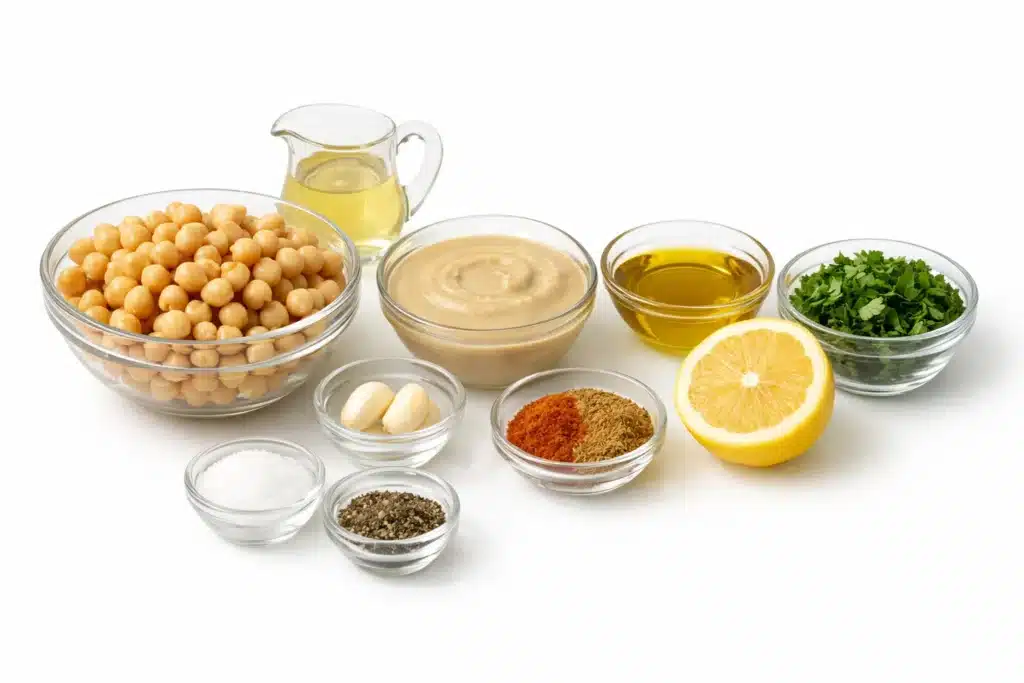
For the Hummus Base
- 2 cups chickpeas, well-cooked or canned, thoroughly drained
(Reserve some of the cooking liquid if possible for adjusting texture) - ½ cup tahini, stirred well to include its natural oils
(Good-quality tahini makes a big difference here)
For Flavor & Creaminess
- ¼ cup extra virgin olive oil, plus more for drizzling
- 2 garlic cloves, peeled
(Use less if you prefer a milder garlic flavor) - Juice of 1 lemon, freshly squeezed, plus more if needed
Seasonings & Garnish
- Salt, to taste
- Freshly ground black pepper, to taste
- 1 tablespoon ground cumin or paprika, plus extra for garnish
- Fresh parsley, finely chopped, for garnish
Each ingredient plays a role: chickpeas give body, tahini provides richness, lemon adds brightness, and olive oil brings everything together into a smooth, luxurious dip.
How to Make Homemade Hummus
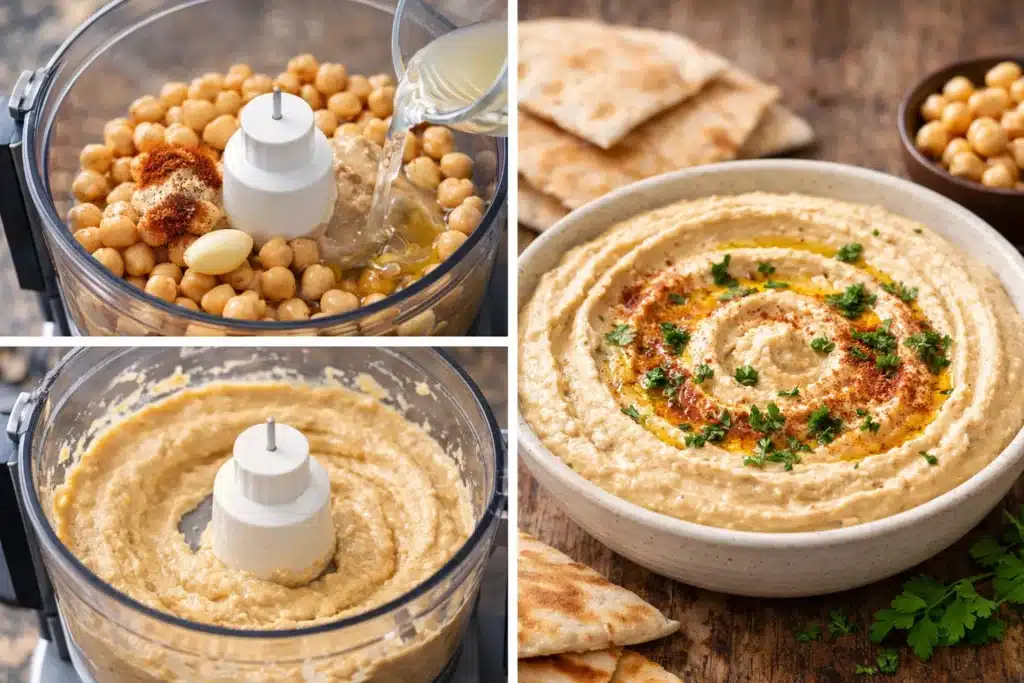
Step 1: Prepare the Chickpeas
Place the drained chickpeas into the bowl of a food processor. If you have time, gently rub the chickpeas between your hands to loosen and remove some of the skins.
Why this matters: Removing skins isn’t mandatory, but it helps create an extra-smooth hummus with a lighter texture.
Step 2: Add the Core Ingredients
Add the tahini, olive oil, garlic cloves, lemon juice, cumin or paprika, salt, and black pepper to the food processor. Secure the lid and begin processing.
Visual cue: At this stage, the mixture will look thick and slightly grainy—this is normal.
Step 3: Blend Until Smooth
Let the food processor run for 1–2 minutes, stopping once or twice to scrape down the sides. This extended blending time helps fully break down the chickpeas and emulsify the tahini and oil.
Step 4: Adjust the Texture
With the processor running, slowly add a few tablespoons of reserved chickpea cooking liquid or cold water. Continue blending until the hummus becomes smooth, creamy, and light.
Mini-tip: Adding liquid gradually prevents the hummus from becoming too thin too quickly.
Step 5: Taste and Fine-Tune
Taste the hummus and adjust the seasoning. Add more salt, lemon juice, or spice as needed. Blend again briefly to incorporate.
Why this matters: Hummus should taste well-seasoned but balanced—bright, nutty, and savory all at once.
Step 6: Serve and Garnish
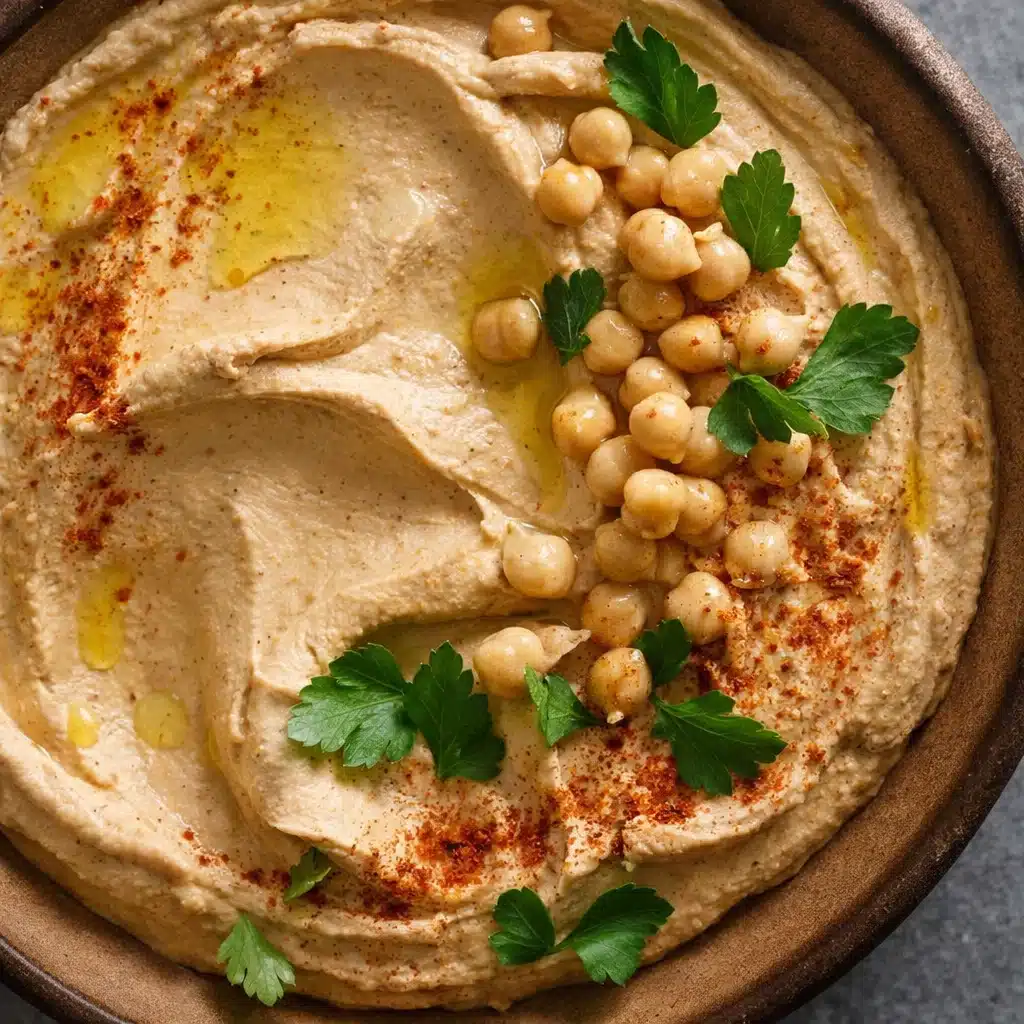
Transfer the hummus to a serving bowl. Use the back of a spoon to create gentle swirls on the surface. Drizzle with olive oil and sprinkle with cumin or paprika and chopped parsley.
Serving and Storage Tips
Serving Ideas
- Serve hummus with warm pita bread, flatbread, or naan.
- Pair it with fresh vegetables like carrots, cucumbers, and bell peppers.
- Use it as a spread in wraps, sandwiches, or burgers.
- Add a generous spoonful to grain bowls or roasted vegetables.
Storage Tips
- Store hummus in an airtight container in the refrigerator for up to 5 days.
- Before serving leftovers, stir well and add a teaspoon of water or olive oil to refresh the texture.
- Hummus is best served at room temperature, so let it sit out for 10–15 minutes before serving.
Helpful Notes
- Tahini Quality Matters: Bitter tahini will affect the final taste. Look for smooth, pourable tahini made from hulled sesame seeds.
- Garlic Control: For a milder garlic flavor, briefly sauté the garlic in olive oil before blending.
- Extra Smooth Option: For ultra-silky hummus, blend the tahini and lemon juice first for 30 seconds before adding chickpeas.
- Flavor Variations: Try adding roasted red peppers, roasted garlic, olives, or a pinch of smoked paprika for variety.
- Consistency Tip: Classic hummus should be soft and creamy, not stiff. It should spread easily with a spoon.
Conclusion
This homemade hummus recipe is a true kitchen staple—simple, nourishing, and endlessly versatile. With just a handful of ingredients and a few minutes in a food processor, you can create a dip that’s far superior to anything store-bought. The smooth texture, balanced flavor, and fresh finish make it perfect for everyday snacking or special gatherings. Whether you keep it classic or customize it with your favorite additions, this hummus is guaranteed to become a regular in your kitchen.
If you tried this recipe, don’t forget to leave a comment and a star rating below—it really helps others! Share your hummus creations on Pinterest or Facebook, and tell us: Did you keep it classic, or did you add your own twist?
Frequently Asked Questions (FAQ)
Can I use canned chickpeas for hummus?
Yes, canned chickpeas work perfectly and are very convenient. Just make sure to rinse and drain them well. If possible, reserve some of the liquid for adjusting the texture.
How do I make hummus extra smooth?
Blend longer than you think you need to, remove chickpea skins if possible, and add liquid gradually while blending. Using good-quality tahini also makes a big difference.
Is hummus gluten-free?
Yes, hummus is naturally gluten-free as long as all ingredients are pure and uncontaminated. Just be mindful of what you serve it with.
Can I freeze hummus?
Hummus can be frozen for up to 3 months, but the texture may change slightly. Thaw in the refrigerator and stir well, adding olive oil or water to restore creaminess.
Why does my hummus taste bitter?
Bitterness usually comes from poor-quality tahini or too much garlic. Try switching tahini brands and adjusting the garlic amount.
How thick should hummus be?
Hummus should be creamy and spreadable, not stiff or runny. It should slowly fall off a spoon when lifted.
Can I make hummus without tahini?
Yes, but the flavor will be different. You can substitute with Greek yogurt, nut butter, or extra olive oil, though classic hummus always includes tahini.

Classic Creamy Homemade Hummus
Ingredients
Method
- Place the drained chickpeas into the bowl of a food processor. If desired, gently rub them to loosen and remove some of the skins for a smoother texture.
- Add tahini, olive oil, garlic, lemon juice, cumin or paprika, salt, and black pepper. Secure the lid and begin processing.
- Blend for 1–2 minutes, stopping to scrape down the sides as needed, until the mixture begins to look creamy.
- With the processor running, gradually add reserved chickpea liquid or cold water until the hummus is smooth, light, and creamy.
- Taste and adjust seasoning with additional salt, lemon juice, or spices as desired. Blend briefly to combine.
- Transfer hummus to a serving bowl, create swirls with a spoon, drizzle with olive oil, and garnish with spices and fresh parsley.