
Char Kway Teow is one of Southeast Asia’s most beloved street food treasures — a stir-fried noodle dish famous for its smoky aroma and irresistible balance of sweet, savory, and umami flavors. Made with flat rice noodles, plump shrimp, Chinese sausage, and a glossy soy-based sauce, it delivers pure comfort in every bite. Whether you’ve tasted it in Penang’s bustling hawker stalls or are discovering it for the first time, this homemade version brings that same authentic “wok hei” flavor right to your kitchen.
Table of Contents
Table of Contents
Why You’ll Love This Recipe
- Quick & Easy: Ready in just 20 minutes, perfect for busy weeknights.
- Authentic Flavor: Brings that signature smoky “wok hei” you love from Malaysian street food.
- Simple Ingredients: Everyday items create bold, restaurant-quality flavor.
- Versatile & Customizable: Adjust spice, protein, or sweetness to your taste.
- Crowd-Pleaser: A comforting, flavorful dish that impresses every time.
Unlike many other stir-fried noodle recipes, this Char Kway Teow achieves the ideal texture — chewy noodles coated in a deeply caramelized sauce, without turning greasy or heavy.
Ingredients Needed
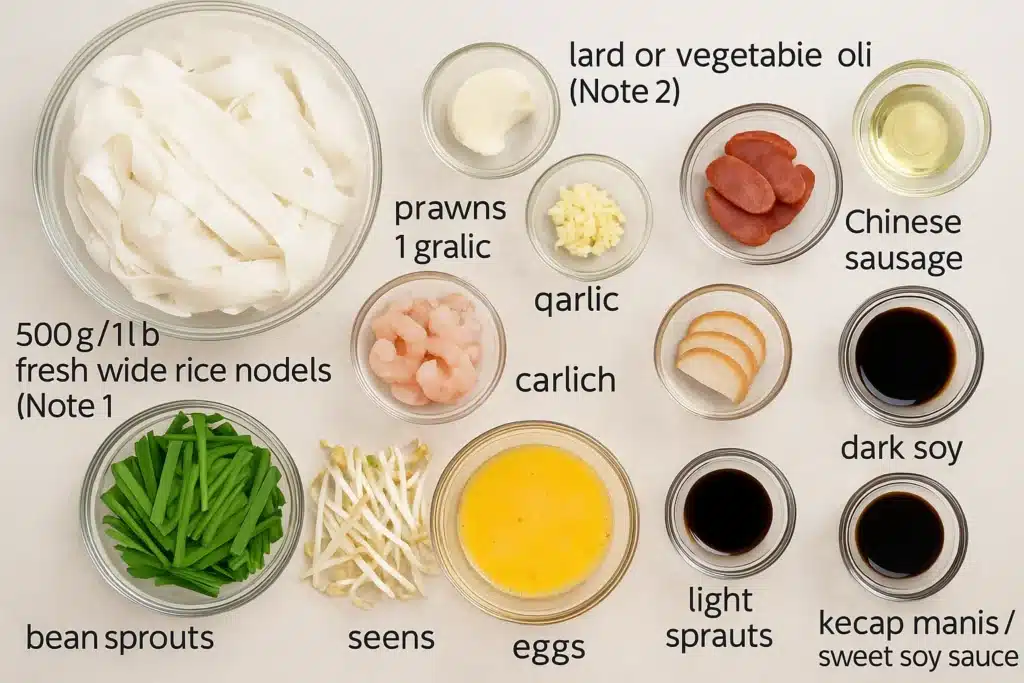
For the Base
- 500 g (1 lb) fresh wide rice noodles – softened and separated (see note below)
- 2 tbsp lard (or vegetable oil for a lighter option)
- 2 tbsp vegetable oil, divided
- 10 small prawns (shrimp) – peeled and deveined
- 2 garlic cloves, finely chopped
- 1 Chinese sausage (Lup Chong) – sliced thinly on a diagonal
- 5 cm (2-inch) piece of fried fish cake, thinly sliced
- 20 stems garlic chives, cut into 4 cm (1.5-inch) pieces
- 2 ½ cups bean sprouts
- 2 eggs, lightly beaten
For the Sauce
- 5 tsp dark soy sauce – for deep color and rich flavor
- 4 tsp light soy sauce – for saltiness and balance
- 2 tsp oyster sauce – adds umami depth
- 4 tsp kecap manis (sweet soy sauce) – adds sweetness and sheen
How to Make Char Kway Teow
H3. Step 1: Prepare the Sauce
- In a small bowl, whisk together dark soy sauce, light soy sauce, oyster sauce, and kecap manis.
- Set aside — having the sauce ready ensures you don’t overcook the noodles later.
H3. Step 2: Soften the Noodles
- If your rice noodles are cold or stiff, place the entire packet in the microwave for 1½–2 minutes until warm and pliable (not hot).
- Gently separate the noodles into strands. If they start to stick again before cooking, reheat briefly (30 seconds). Tip: Warming helps prevent noodles from breaking when stir-frying.
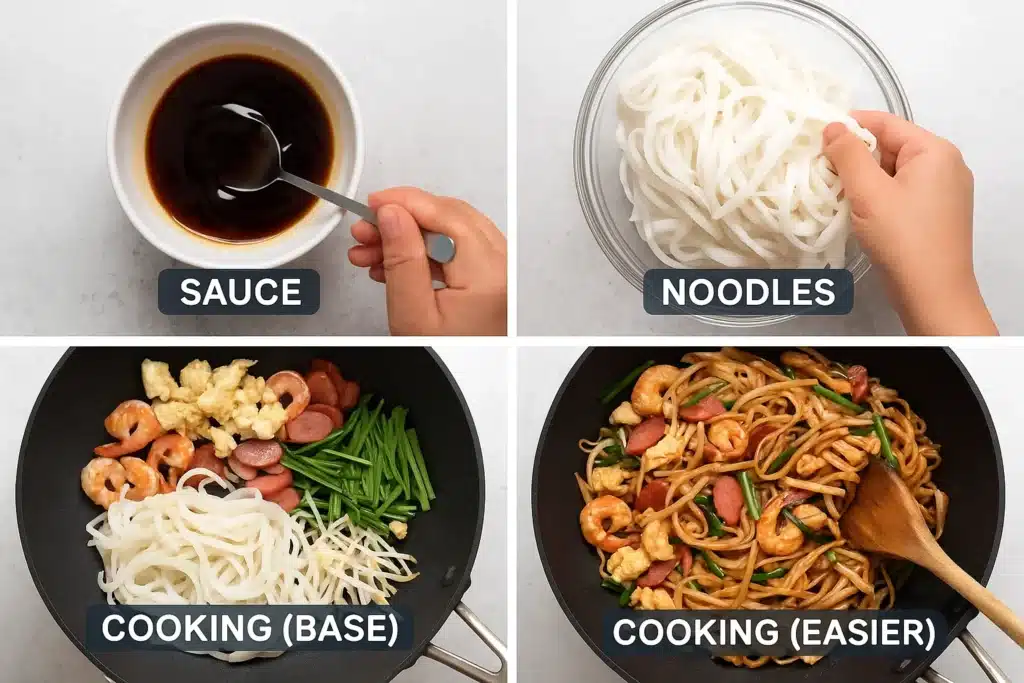
Step 3: Stir-Fry the Ingredients (Base Recipe)
- Heat lard and 1 tbsp oil in a wok or heavy skillet over high heat until it begins to smoke — this high temperature builds the signature wok hei flavor.
- Add prawns and sear for about 30 seconds until just pink.
- Toss in garlic, stir for 10 seconds until fragrant.
- Add noodles and toss 3–4 times using tongs or a spatula until coated with oil.
- Add Chinese sausage and fish cake, folding them through to mix evenly.
- Add bean sprouts and chives, and stir-fry for about 30 seconds more — just enough to keep them crisp.
- Push everything to one side, add remaining oil, and pour in the beaten eggs. Let them set slightly, then scramble and mix through.
- Pour in the prepared sauce and toss everything together, pausing occasionally to let the noodles caramelize slightly at the edges.
- Serve immediately while steaming hot and glossy.
Step 4: Easier Non-Wok Method (Optional)
- Heat 1 tbsp oil in a large non-stick pan over high heat.
- Cook shrimp for 1–2 minutes, then remove.
- Add Chinese sausage and fish cake, sauté 1 minute until lightly crisp.
- Add egg, scramble lightly, then return all cooked ingredients to the pan.
- Add lard and garlic, followed by noodles. Gently fold to coat.
- Add bean sprouts, chives, and the sauce, tossing 5–6 times.
- Let noodles rest briefly between stirs to develop caramelized flavor.
- Remove from heat and serve hot.
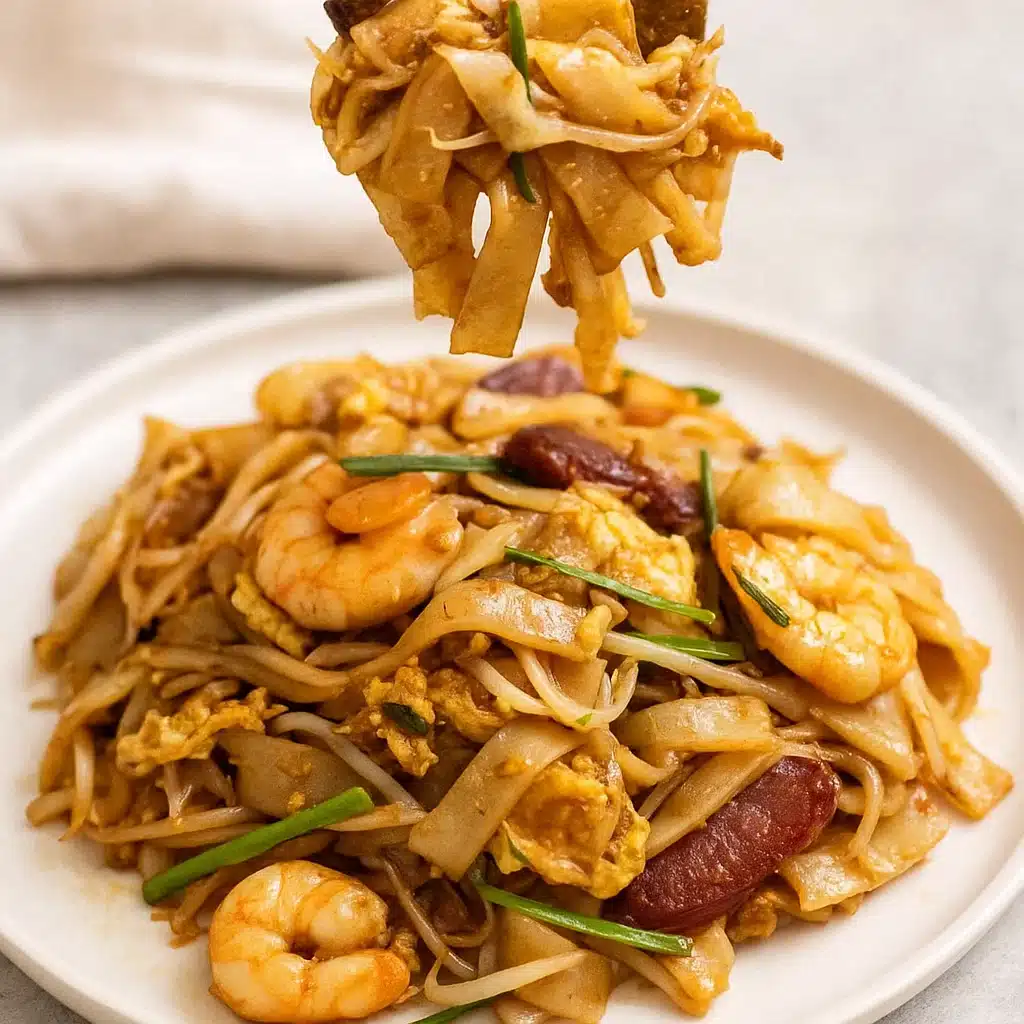
Serving and Storage Tips
- To Serve: Garnish with extra bean sprouts, sliced chili, and a squeeze of lime. It pairs beautifully with a side of pickled green chilies or sambal.
- Storage: Keep leftovers in an airtight container for up to 2 days in the fridge.
- Reheating: Microwave briefly or stir-fry over medium heat for 1–2 minutes. Add a splash of water to loosen the noodles if they dry out.
- Avoid freezing, as rice noodles can become brittle once thawed.
Helpful Notes
- Wok Hei Tip: Use high heat and don’t overcrowd your pan — small batches yield the best smoky flavor.
- Substitutions: Try chicken, tofu, or squid instead of shrimp for variation.
- Vegetarian Version: Omit sausage and fish cake, replace with mushrooms, and use vegetarian oyster sauce.
- Sweetness Control: Adjust kecap manis to your taste for a sweeter or more savory balance.
Conclusion
This Char Kway Teow recipe delivers everything you crave in a stir-fried noodle dish — smoky, saucy, and perfectly balanced between sweet and savory. With its bold aroma and chewy noodles, it’s guaranteed to become a go-to favorite in your kitchen.
If you tried this recipe, please leave a star rating and comment below — I’d love to hear how yours turned out!
Don’t forget to share your Char Kway Teow creations on Pinterest or Facebook and tag your friends who love Asian street food!
👉 What twist did you add — extra chili, or a vegetarian spin? Share your version in the comments!
Frequently Asked Questions (FAQ)
Can I use dried rice noodles instead of fresh ones?
Yes, just soak dried flat rice noodles in warm water for 30–40 minutes until pliable, then drain well before cooking. Fresh noodles, however, give the best texture.
How do I get that smoky “wok hei” flavor at home?
Use very high heat, a carbon-steel wok if possible, and cook in small batches. Let ingredients sear without stirring too often — that’s what creates the smoky aroma.
Can I make Char Kway Teow gluten-free?
Absolutely! Use gluten-free soy sauce, oyster sauce, and sweet soy substitute like tamari mixed with a bit of sugar.
Why are my noodles breaking or turning mushy?
Cold noodles are brittle and break easily. Always warm them briefly before cooking, and don’t soak them in water — just loosen them with gentle heat.
Is Char Kway Teow spicy?
Traditionally it’s mildly spicy, but you can easily adjust heat by adding sliced chili or sambal to taste.


Authentic Char Kway Teow (Malaysian Stir-Fried Rice Noodles)
Ingredients
Method
- Step 1: Prepare the Sauce: In a small bowl, whisk together dark soy sauce, light soy sauce, oyster sauce, and kecap manis. Set aside — having the sauce ready prevents overcooking the noodles later.
- Step 2: Soften the Noodles: If noodles are cold or stiff, microwave for 1½–2 minutes until warm and pliable. Gently separate strands. Tip: warming helps prevent breakage during stir-fry.
- Step 3: Stir-Fry the Ingredients: Heat lard and 1 tbsp oil in a wok over high heat until smoking. Add prawns, sear 30 seconds until pink. Add garlic, stir 10 seconds until fragrant. Toss in noodles and stir 3–4 times to coat with oil. Add sausage and fish cake; mix evenly. Add bean sprouts and chives; stir-fry 30 seconds. Push aside, pour remaining oil and eggs, let set slightly, then scramble and mix through. Add sauce and toss well, letting noodles caramelize slightly. Serve immediately.
- Step 4 (Optional): Non-Wok Method: Heat 1 tbsp oil in a large non-stick pan. Cook shrimp 1–2 minutes, remove. Add sausage and fish cake, sauté 1 minute. Add egg, scramble lightly. Add lard, garlic, and noodles; fold to coat. Add bean sprouts, chives, and sauce; toss 5–6 times. Let rest briefly between stirs for caramelization. Serve hot.