
Few kitchen skills feel as rewarding as making perfect Caramelized Onions Recipe. With just onions, butter, salt, and time, you can transform something sharp and pungent into a deeply golden, sweet, and savory ingredient that adds magic to almost any dish. From burgers and sandwiches to pasta, soups, pizzas, and dips, caramelized onions bring richness and comfort in a way few ingredients can. This guide walks you through the process step by step, explaining not just how to do it, but why each step matters, so you can achieve consistently beautiful results every time.
Table of Contents
Table of Contents
Why You’ll Love This Recipe
- Simple Ingredients – Just onions, butter, salt, and a little patience.
- Big Flavor Payoff – Slow cooking unlocks natural sweetness and depth.
- Versatile – Perfect for burgers, soups, pasta, tarts, dips, and more.
- Skill‑Building – Learn a foundational technique used in countless recipes.
- Comforting & Satisfying – The aroma alone makes your kitchen feel warm and inviting.
What sets this caramelized onions method apart is the balance between patience and control. Instead of rushing the process, you’ll learn how gradual heat, proper pan choice, and occasional moisture work together to create onions that are evenly browned, silky‑soft, and intensely flavorful without burning.
Ingredients Needed
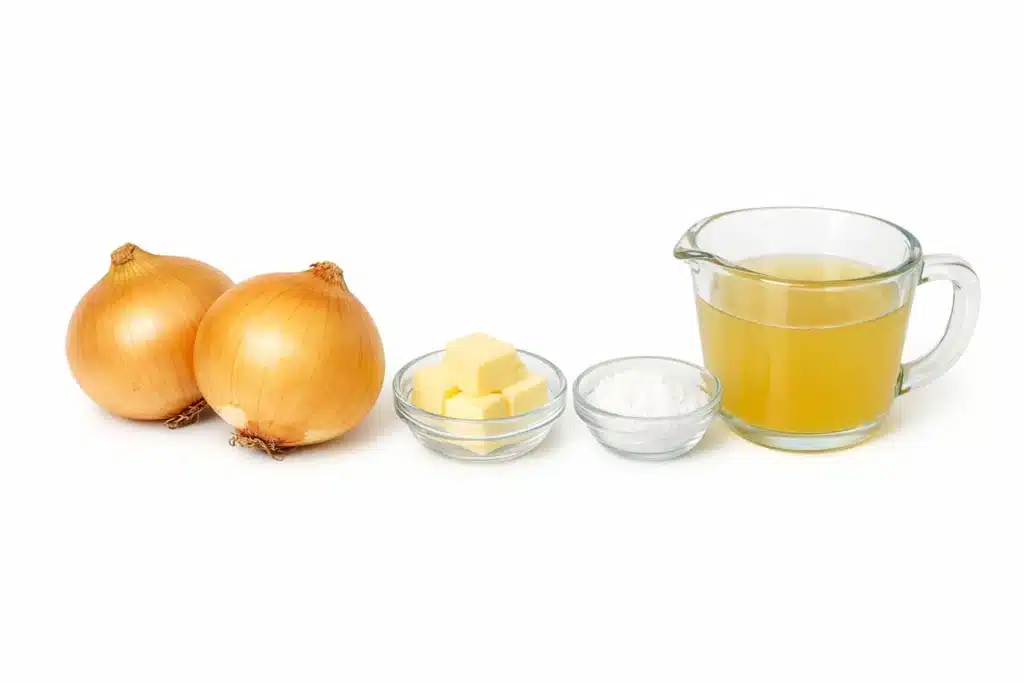
This recipe proves that incredible flavor doesn’t require a long shopping list. Each ingredient plays an important role in the transformation process.
Core Ingredients
- 2 large yellow onions, peeled (about 1 pound)
Yellow onions are ideal because they contain the right balance of sugar and sulfur, which allows them to soften, sweeten, and brown beautifully over time. - 2 tablespoons unsalted butter
Butter adds richness and encourages browning while enhancing the natural sweetness of the onions. - Kosher salt, to taste
Salt helps draw moisture out of the onions early on, allowing them to soften and cook evenly.
Optional (As Needed)
- Low‑sodium chicken broth or water
Used only if the pan becomes too dry. A splash helps dissolve browned bits and prevents burning while adding depth.
How to Make Caramelized Onions Recipe
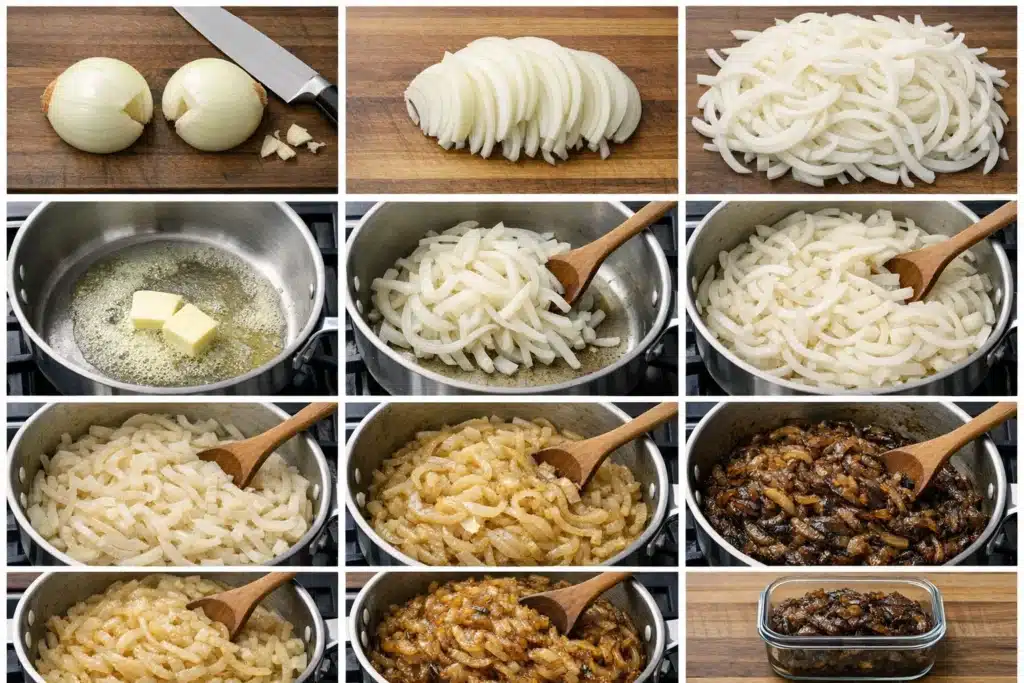
Below is a detailed, beginner‑friendly method that breaks down every stage of caramelizing onions. Expect the full process to take 45–60 minutes depending on how dark you want them.
Step 1 — Prepare the Onions
- Halve the onions through the root end.
Place each onion on a cutting board and slice it in half from top to root. - Remove the root core.
Use the tip of your knife to cut a small V‑shaped notch around the root. Removing this ensures the onion slices separate cleanly during cooking.
This step makes slicing easier and ensures even cooking later.
Step 2 — Slice the Onions Evenly
- Position the onion half with the root end facing you.
- Slice lengthwise, starting from one side and moving across to the other.
- Aim for slices about ⅛ to ¼ inch thick.
Uniform slices cook at the same rate, preventing some pieces from burning while others remain undercooked.
Step 3 — Repeat and Prepare for Cooking
- Repeat the slicing process with the remaining onion halves.
- Don’t be alarmed by the volume — onions shrink dramatically as they cook and release moisture.
Starting with a generous amount ensures you end up with a worthwhile portion after caramelization.
Step 4 — Heat the Pan and Butter
- Place a large saucepan or skillet with high sides over medium heat.
- Add 2 tablespoons of unsalted butter and let it melt completely until it begins to gently sizzle.
A wide pan allows moisture to evaporate efficiently, which is crucial for browning rather than steaming.
Step 5 — Add the Onions Gradually
- Add a couple of large handfuls of onions to the pan instead of dumping them all in at once.
- Stir gently until they begin to soften and turn translucent, about 1–2 minutes.
- Continue adding onions in batches, stirring each time, until all are in the pan.
- Season lightly with a pinch of kosher salt.
Adding onions gradually prevents overcrowding, which can trap steam and slow down caramelization.
Step 6 — Cook Until Soft and Blonde
- Reduce the heat to medium‑low.
- Cook the onions for 15–20 minutes, stirring every few minutes.
- Watch as they soften, release moisture, and slowly turn a pale golden color.
At this stage, the onions are sweet, tender, and lightly colored — perfect for soups or gentler dishes.
Step 7 — Develop Deep Golden Color
- Continue cooking for another 15–20 minutes, stirring regularly.
- As the moisture evaporates, the onions will begin to brown more quickly.
- If you notice sticking or dark spots forming too fast, lower the heat slightly.
If the pan gets dry, add a small splash of broth or water. This loosens browned bits, which dissolve back into the onions and deepen flavor.
Step 8 — Go Dark (Optional)
- For very dark, intensely flavored onions, continue cooking another 10–15 minutes.
- Stir frequently and watch closely — this stage requires attention to avoid burning.
- The onions should be deeply golden with slightly crisp edges.
These onions are ideal for burgers, steak toppings, or rich dips.
Step 9 — Cool and Store
- Remove the pan from heat and let the onions cool slightly.
- Use immediately or transfer to an airtight container.
- Refrigerate for up to 1 week.
The flavor often improves after resting, making them excellent for meal prep.
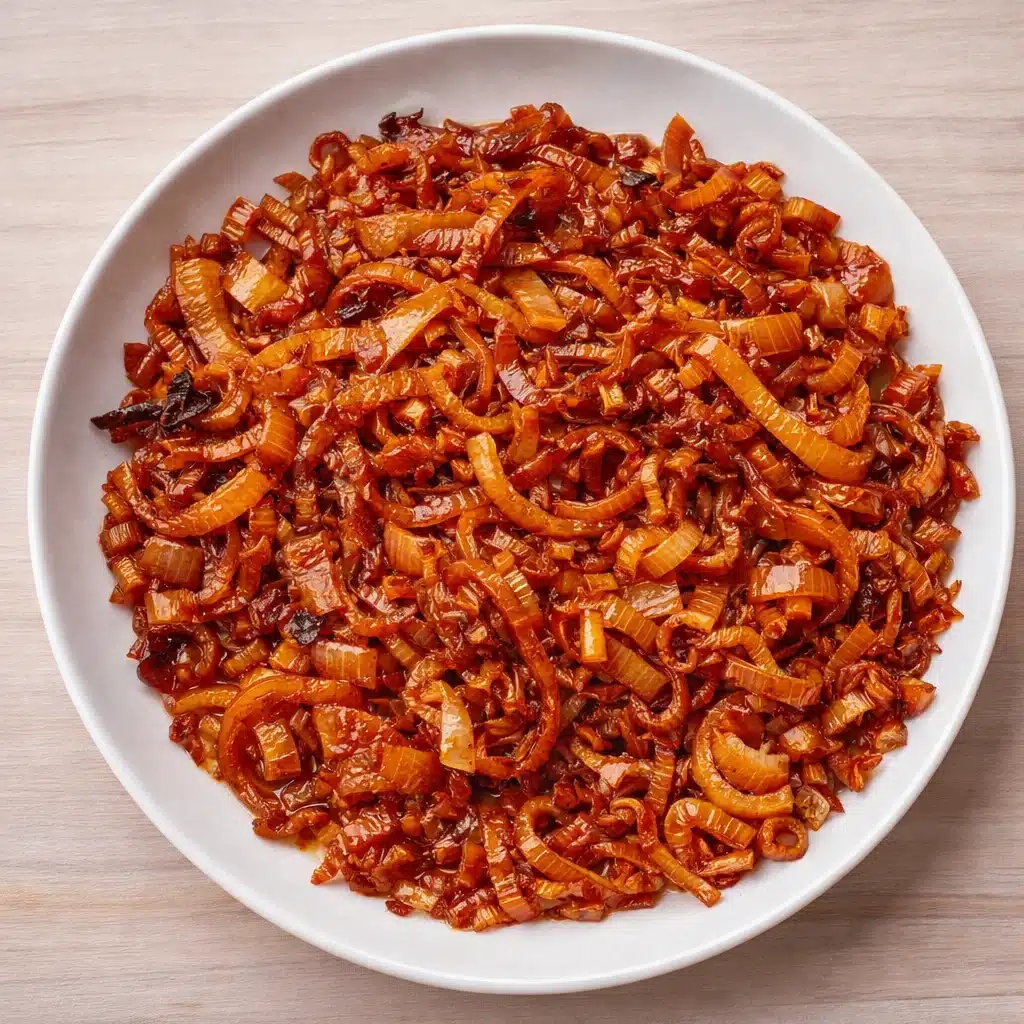
Serving and Storage Tips
Serving Ideas
- Spoon onto burgers, hot dogs, or steak for instant depth.
- Stir into pasta, risotto, or mashed potatoes.
- Use as a base for French onion soup.
- Spread onto toast, pizza, or flatbreads.
- Fold into dips, omelets, or quiches.
Caramelized onions enhance both simple and elaborate dishes without overpowering them.
Storage and Reheating
- Refrigerator: Store in an airtight container for up to 7 days.
- Freezer: Freeze in small portions for up to 3 months.
- Reheating: Warm gently in a skillet over low heat or microwave in short bursts.
Helpful Notes
- Patience is essential: True caramelization cannot be rushed.
- Low heat wins: High heat causes burning before sugars develop.
- Butter vs oil: Butter adds flavor; oil alone browns but lacks richness.
- Salt timing matters: Early salting draws moisture out and speeds softening.
- Pan choice matters: Wide, heavy‑bottom pans give best results.
These small details are what separate pale sautéed onions from deeply caramelized ones.
Conclusion
Mastering caramelized onions Recipe is one of the most valuable kitchen skills you can learn. With just a few humble ingredients and some patience, you create a deeply flavorful component that elevates countless dishes. Whether you prefer them lightly golden or deeply dark and jammy, this method gives you full control over the outcome. Once you make them from scratch, it’s hard to go back.
If you tried this recipe, leave a comment and a ⭐⭐⭐⭐⭐ rating below — it helps others learn and improve too.
📌 Share this guide on Pinterest or Facebook, and tell us: How did you use your caramelized onions? Burgers, pasta, or something creative?
Frequently Asked Questions (FAQ)
How do you caramelize onions?
You caramelize onions by slowly cooking sliced onions over medium‑low heat, allowing their natural sugars to break down and brown gradually over time.
Is there a trick to caramelizing onions?
The key trick is patience. Low heat, frequent stirring, and enough time allow the onions to soften, release moisture, and brown evenly without burning.
Do you caramelize onions with oil or butter?
Both work, but butter adds richer flavor. Many cooks use butter alone or a mix of butter and oil to prevent scorching.
What is caramelization of onions?
Caramelization is the process where natural sugars in onions break down under heat, turning the onions brown, sweet, and deeply savory.
Can caramelized onions be frozen?
Yes. Cool them completely, portion into airtight containers, and freeze for up to three months. Thaw and reheat gently before using.
Why are my onions burning instead of caramelizing?
The heat is likely too high or the pan too dry. Lower the heat and add a small splash of water or broth to loosen browned bits.
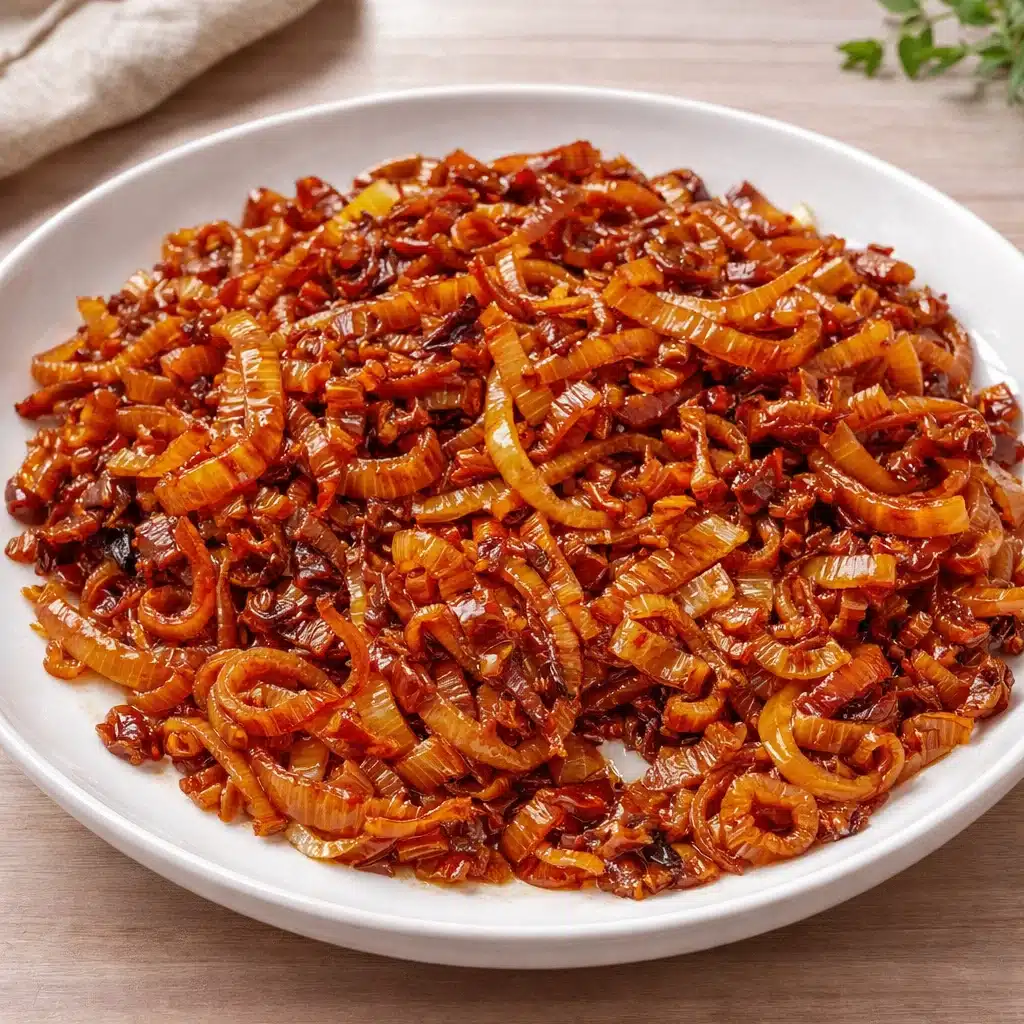

Perfect Caramelized Onions
Ingredients
Method
- Halve the onions through the root end. Remove the root core by cutting a small V-shaped notch so the slices separate easily.
- Slice each onion half lengthwise into even slices about 1/8 to 1/4 inch thick for uniform cooking.
- Place a large skillet over medium heat. Add the butter and let it melt completely until gently sizzling.
- Add the onions gradually in batches, stirring gently as they soften. Season lightly with a pinch of kosher salt.
- Reduce heat to medium-low and cook for 15–20 minutes, stirring every few minutes, until the onions are soft and lightly golden.
- Continue cooking another 15–20 minutes, stirring regularly, as the onions deepen in color. Lower heat if browning too quickly.
- If the pan becomes dry or onions begin sticking, add a small splash of broth or water to loosen the browned bits.
- For very dark, jammy onions, cook an additional 10–15 minutes, stirring frequently to prevent burning.
- Remove from heat, allow to cool slightly, and use immediately or store for later use.