
Bibimbap — the iconic Korean rice bowl — is a feast for the eyes and the taste buds. Each bite is a beautiful mix of textures and flavors: tender marinated beef, perfectly cooked vegetables, a golden fried egg, and a spicy-sweet gochujang sauce that ties it all together.
This dish is all about balance — warm rice, crisp veggies, savory meat, and a hint of heat. Whether you’re trying Korean food for the first time or craving a comforting homemade meal, this Bibimbap recipe brings restaurant-quality flavor right to your kitchen.
Table of Contents
Table of Contents
- Colorful & Nutritious: A vibrant mix of vegetables, protein, and rice that’s as beautiful as it is healthy.
- Totally Customizable: Perfect for using up veggies or proteins you already have at home.
- Packed with Flavor: Sweet, spicy, savory, and umami all in one satisfying bowl.
- Quick to Assemble: With simple prep, you can enjoy a restaurant-worthy meal in less than an hour.
- Authentic Yet Easy: Traditional Korean flavor simplified for home cooks — no fancy tools needed!
Why You’ll Love This Recipe
This Bibimbap stands out because the ingredients are seasoned separately, giving every bite its own flavor and texture — just like in authentic Korean cooking.
Ingredients Needed
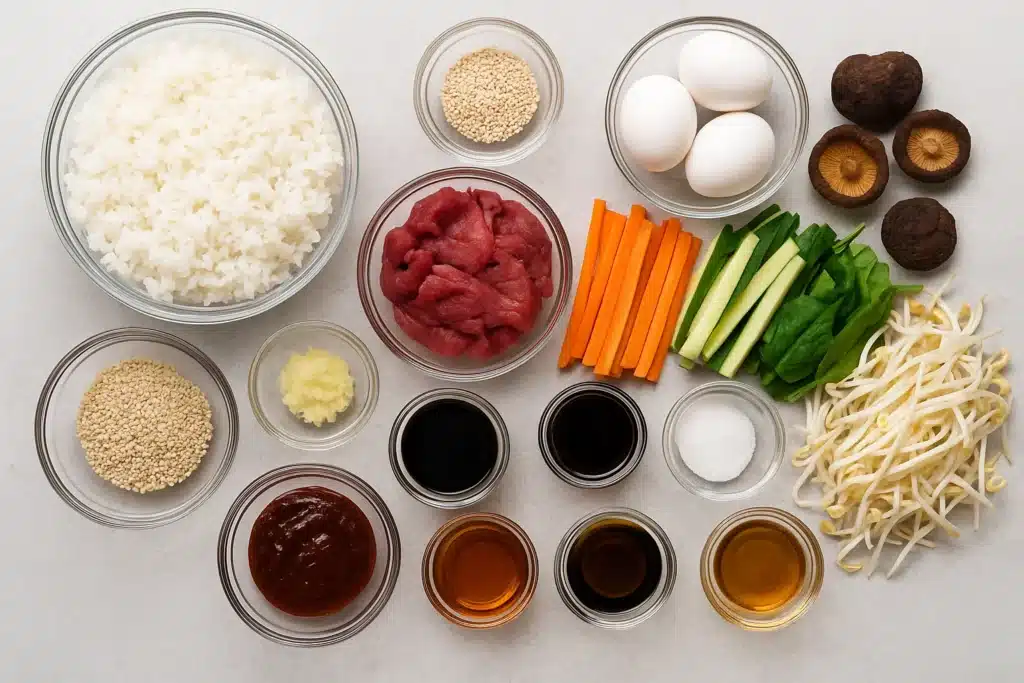
For the Base
- 4 cups cooked white rice, preferably short-grain for stickiness
- 4 eggs, fried to your liking
- 2 tsp toasted sesame seeds
For the Korean Beef & Marinade
- 250 g (8 oz) beef tenderloin or sirloin, thinly sliced
- ¼ green apple, grated (for natural sweetness)
- 3 garlic cloves, minced
- 1 tbsp soy sauce (light or all-purpose)
- 1 tbsp honey or brown sugar
- 2 tsp toasted sesame oil
For the Vegetables
- 2 large carrots, cut into matchsticks
- 2 zucchini, cut into matchsticks
- 1 bunch spinach, trimmed and chopped
- 8 dried shiitake mushrooms, rehydrated and sliced
- 4 cups bean sprouts
- 2 tsp minced garlic (about 3 cloves)
- 8 tsp vegetable oil, divided
- ½ tsp salt, to taste
- 1½ tsp soy sauce
- ¼ tsp fish sauce (or soy sauce substitute)
- ¼ tsp sugar
- Toasted sesame oil, for finishing
For the Bibimbap Sauce
- 4 tbsp gochujang paste (Korean chili paste)
- 2 tbsp mirin (sweet rice wine)
- 2 tbsp rice vinegar
- 1½ tsp soy sauce
- 3 tsp sugar
- 1 garlic clove, finely grated
- 2½ tsp toasted sesame oil
How to Make Bibimbap
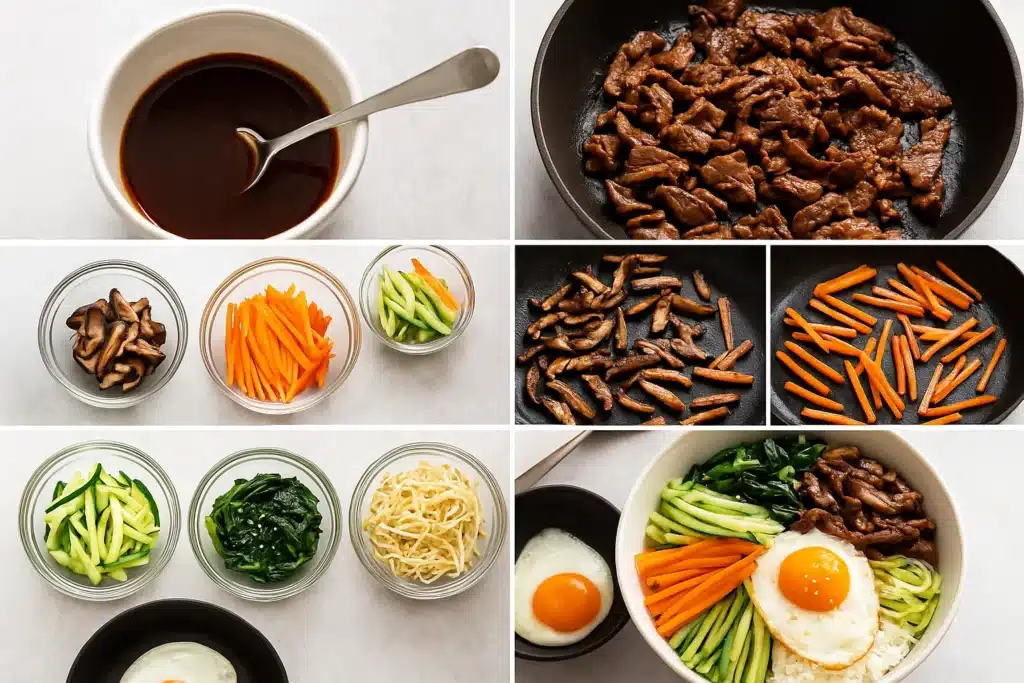
1. Make the Bibimbap Sauce
In a small bowl, whisk together gochujang, mirin, rice vinegar, soy sauce, sugar, garlic, and sesame oil until the sugar dissolves. Set aside — this spicy-sweet sauce will bring the whole dish to life.
2. Marinate the Beef
Combine grated apple, garlic, soy sauce, honey, and sesame oil in a bowl. Add the thinly sliced beef, mixing to coat evenly. Let it marinate for at least 30 minutes (or overnight for deeper flavor).
When ready to cook, heat 2 tsp oil in a skillet over high heat. Shake off excess marinade, then stir-fry the beef for 3–4 minutes, until browned and slightly caramelized. Remove from heat and keep warm.
3. Prepare the Vegetables
- Rehydrate the mushrooms: Soak in hot water for about 30 minutes, then drain and slice.
- Optional salting step: Place the carrot and zucchini in separate bowls, sprinkle with a pinch of salt, let sit for 20 minutes, then drain any liquid. This helps them stay crisp when cooked.
4. Cook the Vegetables (Use Two Pans if Possible!)
- Shiitake mushrooms: Heat 2 tsp oil in a skillet, sauté mushrooms for 2 minutes. Add soy sauce, sugar, and a little garlic. Cook 1 more minute, then remove.
- Carrots: In the same skillet, cook for 5–8 minutes until just tender, then remove.
- Zucchini: Add another 2 tsp oil and sauté for about 4 minutes until soft but not mushy.
- Spinach: Heat 2 tsp oil with a splash of sesame oil. Add spinach and garlic; cook until wilted, season with salt, and squeeze out excess moisture once cool.
- Bean Sprouts: Boil or steam until tender (5 minutes on the stove or 3 minutes in the microwave). Drain, cool, squeeze out liquid, and toss with sesame oil, garlic, and fish sauce.
Let the veggies cool slightly — Bibimbap is meant to be served warm or at room temperature.
5. Assemble the Bibimbap
Fry your eggs to your liking — sunny side up is traditional for a runny yolk.
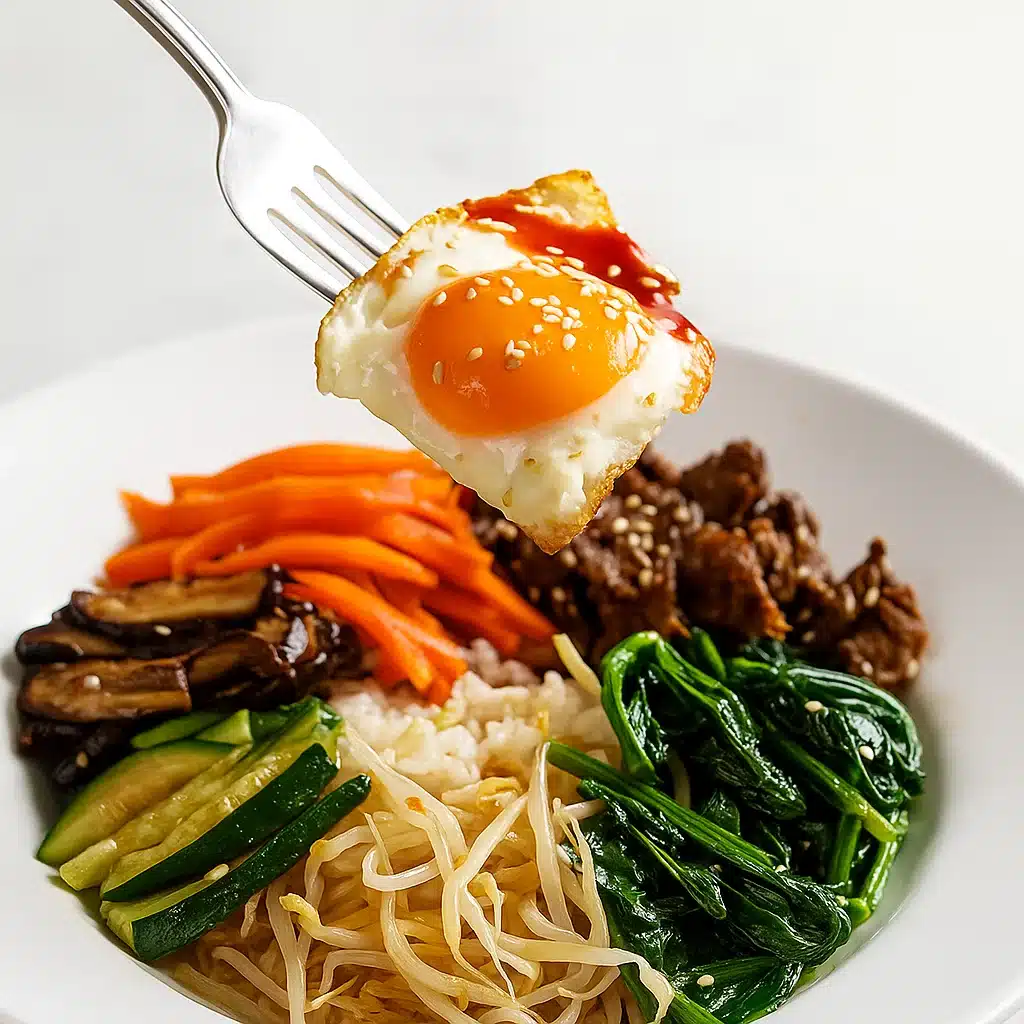
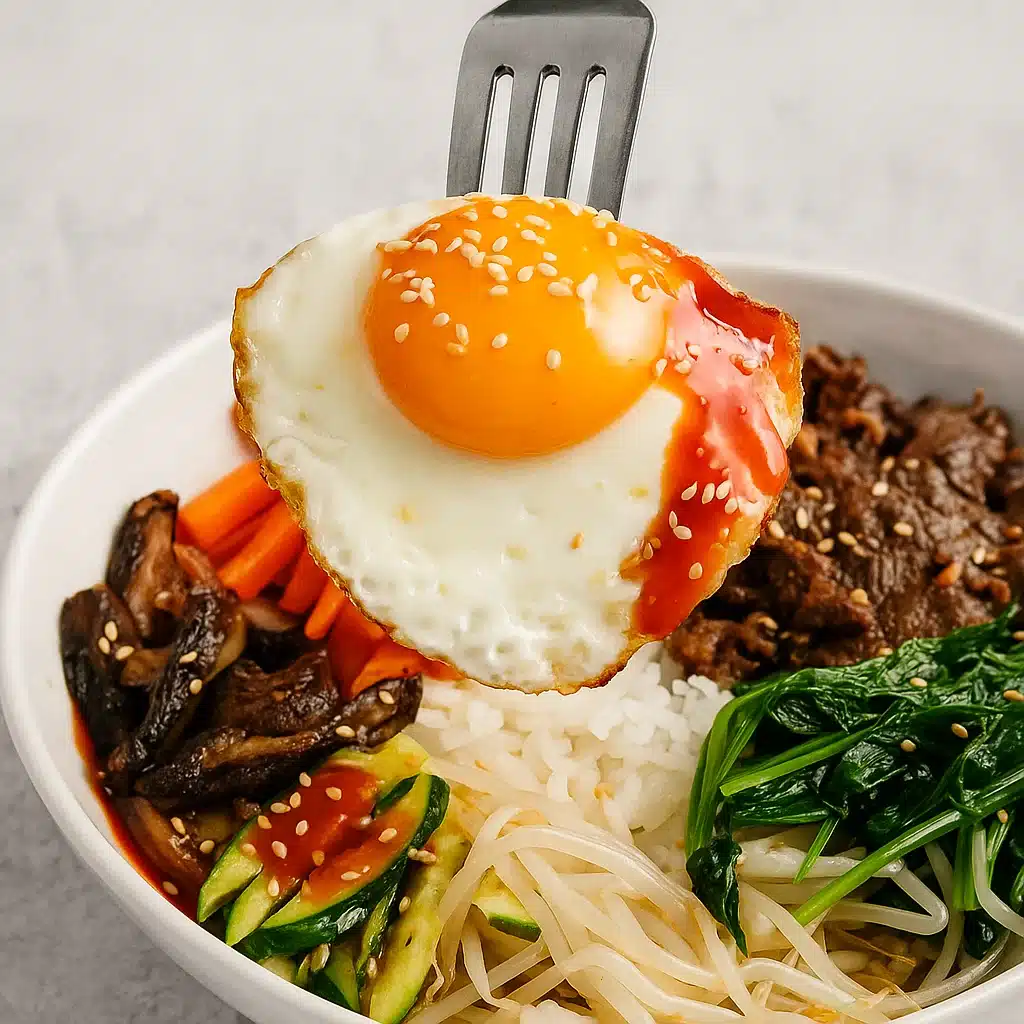
Scoop warm rice into bowls. Arrange the vegetables and beef neatly around the top, keeping each ingredient separate for a stunning presentation. Place the fried egg right in the center, sprinkle with sesame seeds, and drizzle with sesame oil.
Serve with a generous spoonful of Bibimbap sauce and mix everything together before eating!
Serving and Storage Tips
- To Serve: Serve Bibimbap hot in regular bowls or in Korean dolsot (stone bowls) for crispy rice bottoms.
- Add Toppings: Try a sprinkle of roasted seaweed flakes, extra sesame seeds, or sliced green onions for extra texture.
- To Store: Keep leftovers in airtight containers in the fridge for up to 3 days. Store the sauce separately.
- To Reheat: Warm the rice and toppings in a skillet with a little sesame oil, then top with a fresh fried egg.
Helpful Notes
- No beef? Substitute with tofu, chicken, or even mushrooms for a vegetarian version.
- Short on time? Use pre-cooked vegetables or leftover stir-fry.
- Want extra spice? Add more gochujang or a pinch of chili flakes.
- Make it fancy: Serve in a hot stone bowl to crisp the rice base like authentic dolsot Bibimbap.
- Perfect balance: Each ingredient is seasoned separately — that’s the secret to restaurant-level Bibimbap flavor!
Conclusion
This Bibimbap recipe is the ultimate Korean comfort food — vibrant, flavorful, and satisfying in every bite. The combination of tender beef, crisp veggies, soft rice, and that fiery-sweet sauce makes it truly unforgettable.
Give it a try, and you’ll see why it’s loved all around the world!
If you make this recipe, please leave a comment and a star rating below — I’d love to hear how yours turned out!
What toppings did you add to your Bibimbap? Share your creative twists in the comments or on Pinterest and Facebook!
Frequently Asked Questions (FAQ)
Can I make Bibimbap vegetarian?
Yes! Simply skip the beef and add extra veggies or tofu. Pan-fried mushrooms or marinated tempeh are great protein options.
Can I use brown rice instead of white rice?
Definitely. Brown rice adds a nutty flavor and extra fiber — just make sure it’s cooked until tender.
Is Bibimbap served hot or cold?
Traditional Bibimbap is served warm, but it’s delicious at room temperature too. Cold Bibimbap (called “Bibim Guksu”) is a refreshing summer twist using noodles.
Can I prepare Bibimbap ahead of time?
Yes! You can prep the veggies, sauce, and meat in advance. Store each component separately and assemble just before serving.
What if I can’t find gochujang?
You can mix chili paste with a little miso, soy sauce, and honey as a quick substitute. It won’t be quite the same, but it’ll still taste great!

Bibimbap (Korean Mixed Rice Bowl)
Ingredients
Method
- Make the Bibimbap Sauce: In a bowl, whisk gochujang, mirin, rice vinegar, soy sauce, sugar, garlic, and sesame oil until smooth. Set aside.
- Marinate the Beef: Combine grated apple, garlic, soy sauce, honey, and sesame oil in a bowl. Add sliced beef and coat evenly. Marinate for at least 30 minutes. Stir-fry over high heat for 3–4 minutes until browned. Keep warm.
- Prepare the Vegetables: Rehydrate mushrooms in hot water for 30 minutes, then slice. Salt carrots and zucchini for 20 minutes, then drain excess moisture.
- Cook the Vegetables: In separate batches, sauté mushrooms with soy sauce, garlic, and sugar for 3 minutes. Cook carrots and zucchini until tender-crisp. Sauté spinach with sesame oil and garlic until wilted, season with salt. Steam or boil bean sprouts until tender, then toss with garlic, fish sauce, and sesame oil.
- Assemble the Bibimbap: Fry eggs sunny side up. Divide warm rice among bowls. Arrange beef and vegetables neatly on top. Place the fried egg in the center, sprinkle with sesame seeds, and drizzle with sesame oil. Serve with Bibimbap sauce and mix before eating.