
If you’ve ever dreamed of a dessert that looks dramatic, tastes luxurious, and requires surprisingly little effort, Basque Cheesecake is exactly what you’re looking for. Famous for its deeply caramelized top, ultra-creamy center, and rustic parchment-paper edges, this iconic cheesecake breaks all the traditional rules—in the best possible way. There’s no crust to fuss over, no water bath to stress about, and no perfection required. Instead, you get a boldly baked cheesecake with a rich, custardy interior that melts on the tongue. This recipe is designed to give you bakery-level results at home, even if you’re not an experienced baker, while staying true to the authentic Basque style everyone loves.
Table of Contents
Table of Contents
Why You’ll Love This Recipe
- Effortlessly impressive – Its dramatic burnt top and rustic sides look straight out of a pastry shop
- No crust, no water bath – Fewer steps and zero complicated techniques
- Ultra-creamy texture – Soft, custard-like center with a rich, silky mouthfeel
- Simple, honest ingredients – Nothing fancy, just perfectly balanced basics
- Crowd-pleasing dessert – Ideal for dinner parties, holidays, or special occasions
- Forgiving recipe – Cracks, sinking, and imperfections are part of its charm
What sets this Basque Cheesecake apart is the balance between intense caramelized flavor on the outside and a barely set, creamy interior. It’s bold yet comforting, rustic yet refined—a dessert that feels indulgent without being fussy. Whether you’re baking to impress guests or treating yourself, this recipe delivers maximum satisfaction with minimal stress.
Ingredients Needed
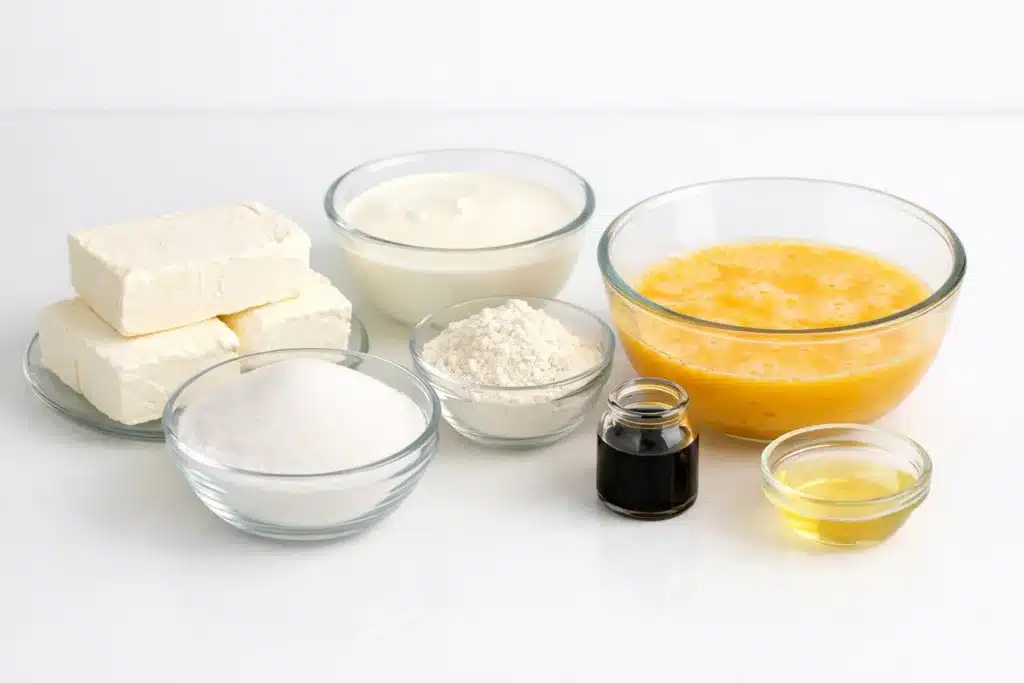
This recipe relies on a short list of ingredients, but quality and preparation matter. Using full-fat dairy and room-temperature ingredients ensures the smoothest, creamiest result.
For the Cheesecake Batter
- Cream cheese (750 g / 1.5 lb) – Full-fat blocks, softened to room temperature for a smooth, lump-free batter (Philadelphia works beautifully)
- Caster sugar (1 cup) – Superfine sugar dissolves easily, but regular white sugar works just as well
- Whipping cream (1¼ cups) – Full-fat cream, removed from the fridge about 15 minutes before using
- All-purpose flour (¼ cup) – Helps stabilize the cheesecake while keeping the center creamy
- Vanilla extract or vanilla bean paste (1 teaspoon) – Adds warmth and depth without overpowering
- Eggs (¾ cup + 1 tablespoon, lightly whisked) – About 4–5 large eggs, at room temperature, measured for accuracy
Each ingredient plays a specific role: the cream cheese provides richness, the eggs create structure, and the cream softens the texture into that signature custardy center.
How to Make Basque Cheesecake
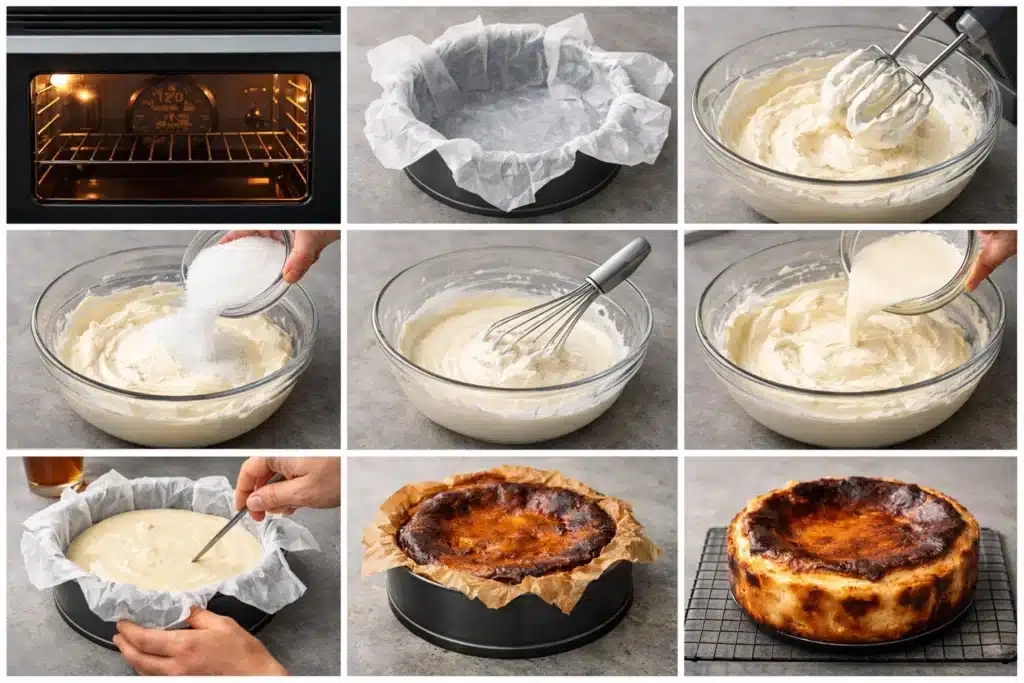
1. Preheat the Oven
Preheat your oven to 220°C / 425°F (200°C fan) with the rack positioned in the middle. Basque Cheesecake relies on high heat to achieve its deeply caramelized top, so proper preheating is essential.
2. Prepare the Pan
Line a 20 cm / 8-inch springform pan (about 6 cm / 2.5 inches tall) with two large sheets of parchment paper arranged in an “X” shape. Scrunch the paper first—this makes it easier to press into the pan and creates the signature rustic, crinkled sides. Let the excess paper hang over the edges; the batter will weigh it down during baking.
Why this matters: The parchment prevents sticking and gives the cheesecake its iconic look.
3. Beat the Cream Cheese
Place the softened cream cheese in a large mixing bowl. Beat on medium speed for about 2 minutes, scraping down the sides as needed, until completely smooth and free of lumps.
Visual cue: The mixture should look glossy and creamy, not grainy.
4. Add the Sugar
Add the sugar and beat on low speed for about 10 seconds, just until combined. Avoid overmixing—this helps prevent excess air from getting into the batter.
5. Mix the Flour and Cream Separately
In a medium bowl, whisk together ¼ cup of the cream with all the flour until smooth and paste-like. Slowly whisk in the remaining cream until fully combined, then add the vanilla.
Why this step is important: Mixing flour with liquid first prevents lumps and ensures a silky batter.
6. Combine the Batter
With the mixer running on low speed, slowly pour the cream mixture into the cream cheese. Mix just until incorporated. Then, gradually add the whisked eggs, still on low speed. Stop mixing as soon as everything is combined.
Mini tip: Overbeating introduces air, which can cause cracks and bubbles.
7. Remove Air Bubbles
Pour the batter into the prepared pan. Gently bang the pan on the counter to release trapped air. Use a small knife or skewer to pop any bubbles that rise to the surface. Repeat a few times for a smoother finish.
8. Bake
Bake for 45 minutes, checking during the last 15 minutes. The top should be deeply golden brown—almost burnt—but not black. Depending on your oven, baking time may extend up to 65 minutes.
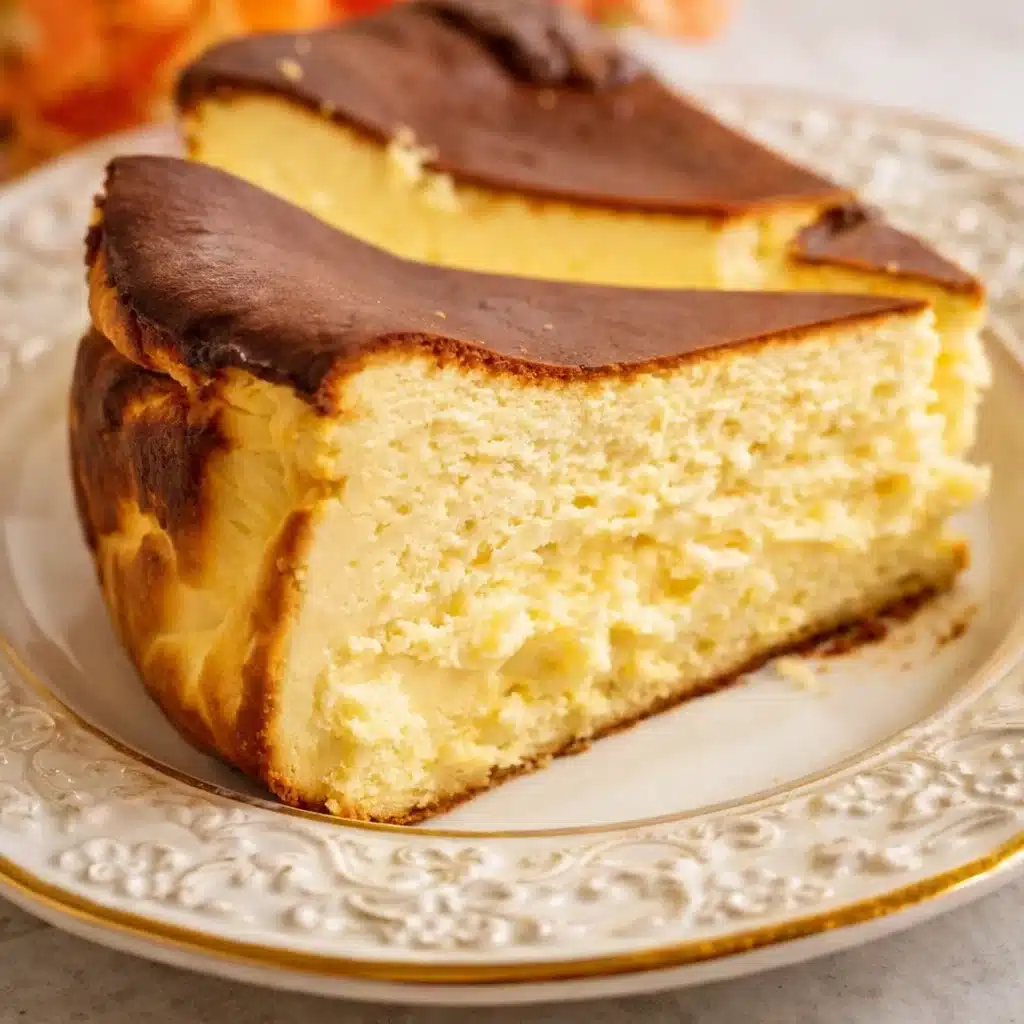
What to expect: The cheesecake will puff up like a soufflé, and the center will still wobble when gently shaken.
9. Cool and Chill
Remove from the oven and let the cheesecake cool in the pan on the counter for at least 2 hours. It will sink as it cools—this is normal. Once cooled, refrigerate uncovered for a minimum of 8 hours, preferably overnight.
10. Serve
Release the springform sides and lift the cheesecake using the parchment paper. Serve directly on the paper for a rustic look. Let it sit at room temperature for 30 minutes before slicing, if possible, for the best texture.
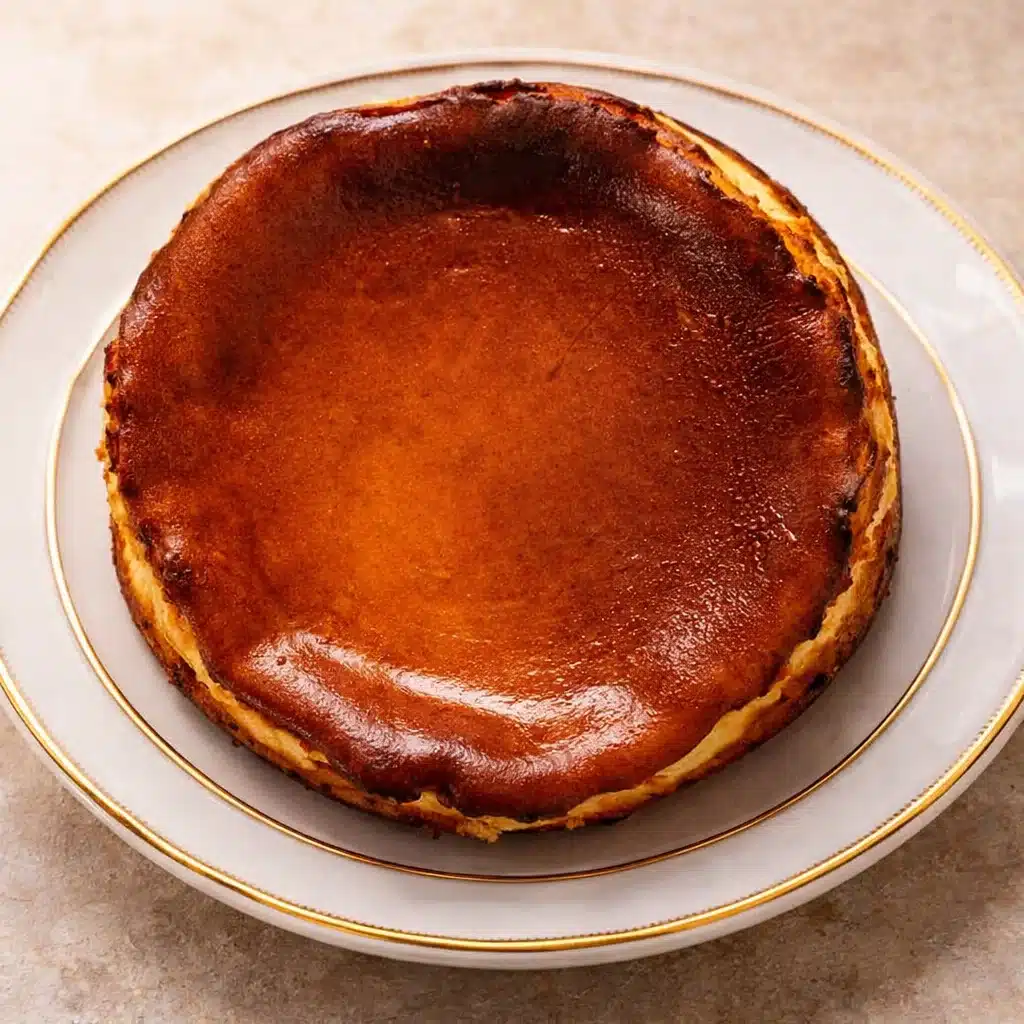
Serving and Storage Tips
Serving Suggestions
- Serve plain to fully appreciate the caramelized flavor and creamy texture
- Slice with a hot, clean knife for neat edges
- Pair with coffee or espresso for a classic contrast
- Optional accompaniments: fresh berries, honey drizzle, or a light dusting of powdered sugar
Storage
- Store leftovers in the refrigerator, uncovered or loosely covered, for up to 4 days
- The flavor deepens after the first day, making it even better
- For best texture, allow slices to sit at room temperature for 15–20 minutes before serving
Helpful Notes
- Room-temperature ingredients are essential for a smooth batter
- Do not skip chilling time—the cheesecake needs time to fully set
- Dark top is intentional—don’t be afraid of the color
- No crust needed—this is part of the authentic Basque style
- Measure eggs carefully for consistent results
You can also experiment with subtle variations, such as adding citrus zest, a hint of cinnamon, or a splash of espresso for a unique twist.
Conclusion
This Basque Cheesecake recipe proves that simplicity can be incredibly powerful. With just a handful of ingredients and a bold baking method, you get a dessert that’s rich, dramatic, and unforgettable. The contrast between the caramelized exterior and the creamy, custard-like center is what makes this cheesecake truly special. Best of all, it’s refreshingly forgiving—imperfections are not flaws here, but part of its rustic charm.
If you try this recipe, I’d love to hear how it turned out for you. Leave a comment below and don’t forget to give it a star rating ⭐⭐⭐⭐⭐ if you enjoyed it. Share your creation on Pinterest or Facebook and inspire others to bake it too. Did you add your own twist or keep it classic? Let us know—we’d love to hear your variations!
Frequently Asked Questions (FAQ)
Can I make Basque Cheesecake gluten-free?
Yes. Simply replace the all-purpose flour with the same amount of gluten-free flour blend. The texture will remain creamy and smooth.
Why is my cheesecake too runny in the center?
Basque Cheesecake is meant to be soft in the middle. However, if it’s overly liquid, it may need more chilling time or a few extra minutes in the oven.
Can I freeze Basque Cheesecake?
Freezing is not recommended, as it can alter the creamy texture. This cheesecake is best enjoyed fresh or refrigerated.
Why did my cheesecake crack or sink?
Cracking and sinking are completely normal for Basque Cheesecake. The dramatic rise and fall contribute to its rustic appearance.
Can I reduce the sugar?
You can slightly reduce the sugar, but keep in mind that sugar contributes to both flavor and the caramelized top.

Basque Cheesecake
Ingredients
Method
- Preheat the oven to 220°C / 425°F (200°C fan) with the rack in the middle position.
- Line a 20 cm springform pan with two crisscrossed sheets of crumpled parchment paper, leaving the edges overhanging.
- Beat the softened cream cheese on medium speed for about 2 minutes until completely smooth.
- Add the sugar and mix briefly on low speed until just combined.
- In a separate bowl, whisk a small amount of cream with the flour until smooth, then whisk in the remaining cream and vanilla.
- With the mixer on low speed, slowly add the cream mixture to the cream cheese.
- Gradually add the whisked eggs, mixing only until fully incorporated.
- Pour the batter into the prepared pan. Tap gently on the counter to release air bubbles.
- Bake for 45–65 minutes until the top is deeply caramelized and the center still wobbles slightly.
- Cool at room temperature for 2 hours, then refrigerate uncovered for at least 8 hours or overnight.
- Remove from the pan using the parchment paper and allow to sit at room temperature for 30 minutes before slicing.