
Baked Parmesan Crusted Salmon is a refined yet approachable dish that transforms a simple fillet into a restaurant-quality centerpiece. The salmon bakes to buttery perfection beneath a golden crust of panko, Parmesan, fresh herbs, and lemon zest—creating a balance of richness, freshness, and texture. Finished with a velvety lemon cream sauce, this recipe delivers an elevated dining experience without unnecessary complexity. Whether served for a family dinner or an elegant gathering, this dish showcases how minimal effort can yield exceptional results.
Table of Contents
Table of Contents
Why You’ll Love This Recipe
- Gourmet made simple: Achieve restaurant-level results with easy-to-follow steps and everyday ingredients.
- Perfectly balanced flavor: The crisp Parmesan-herb topping contrasts beautifully with tender, flaky salmon and a bright lemon sauce.
- Ideal for entertaining: Elegant presentation and exquisite flavor make this a reliable choice for special occasions.
- Consistently perfect results: The precise bake ensures moist salmon every time—never dry, never bland.
- A versatile showpiece: Pairs seamlessly with seasonal sides, from roasted vegetables to creamy mashed potatoes.
This recipe stands out for its balance between sophistication and simplicity, combining texture, freshness, and indulgence in every bite.
Ingredients Needed
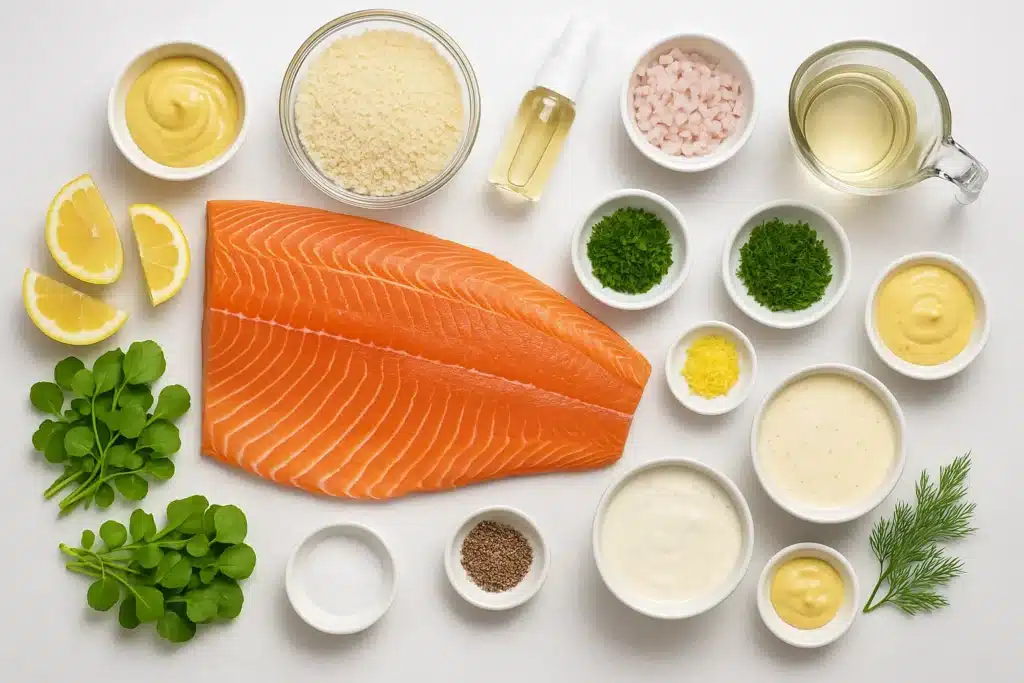
For the Salmon
- 1 side of salmon (1–1.4 kg / 2–2.8 lb), pin bones removed and patted dry
- 3–4 tbsp Dijon mustard, smooth and high-quality
For the Parmesan Crumb Topping
- 1 cup (50 g) panko breadcrumbs – Japanese-style for maximum crunch
- 3 tbsp (50 g) unsalted butter, melted
- ⅓ cup grated Parmesan cheese (or ½ cup if freshly grated for richer flavor)
- 2 tbsp fresh parsley, finely chopped
- 2 tbsp fresh dill, finely chopped
- Zest of 1 lemon – for brightness and aroma
- ½ tsp fine sea salt
- Freshly ground black pepper, to taste
- Oil spray, for pre-toasting crumbs
For the Lemon Cream Sauce
- 2 tbsp (30 g) unsalted butter
- 1 small eschalot (shallot), finely chopped
- 1¼ cups dry white wine (e.g., Sauvignon Blanc or Chardonnay)
- 1½ cups heavy/thickened cream
- 1 tbsp Dijon mustard
- 2½ tbsp fresh lemon juice, plus more to taste
- ½ tsp sugar, to balance acidity
- Salt and pepper, to season
For Serving
- Fresh watercress, for garnish
- Lemon wedges, for squeezing
- Extra fresh dill, optional for presentatio.
How to Make Baked Parmesan Crusted Salmon
Step 1: Prepare the Salmon and Oven
Remove the salmon from the refrigerator about 20 minutes before baking—this allows even cooking throughout. Preheat your oven to 200°C / 390°F (180°C fan) and line a baking tray with foil for easy cleanup.
Step 2: Toast the Panko for Maximum Crunch
Spread panko breadcrumbs evenly on a tray, spray generously with oil, and bake for 3–5 minutes until light golden. This step ensures your crust stays crisp and flavorful after baking. Transfer immediately to a bowl to prevent further browning.
Step 3: Make the Parmesan Crumb Mixture
Combine the toasted panko with melted butter, Parmesan, chopped herbs, lemon zest, salt, and pepper. Stir until evenly moistened—each crumb should glisten slightly from the butter.

Step 4: Coat the Salmon
Place the salmon on the prepared foil. Using a butter knife or spatula, spread a thin layer of Dijon mustard over the top—this acts as an adhesive and adds subtle tang. Gently press the Parmesan crumb mixture over the mustard-coated surface, ensuring even coverage.
Step 5: Bake to Perfection
Bake for 20 minutes, or until the salmon flakes easily with a fork and the crust turns golden brown. For best results, the center should remain slightly translucent and moist.
Step 6: Prepare the Lemon Cream Sauce
While the salmon bakes, melt butter in a saucepan over medium heat. Add the chopped eschalot and sauté for 2 minutes until fragrant and translucent—this builds the base flavor.
Pour in the wine and bring to a rapid boil, reducing it by about three-quarters (5 minutes). Lower the heat and stir in cream, mustard, lemon juice, sugar, salt, and pepper. Simmer gently for 2–3 minutes, stirring, until the sauce thickens enough to coat the back of a spoon. Adjust seasoning to taste.
Step 7: Assemble and Serve
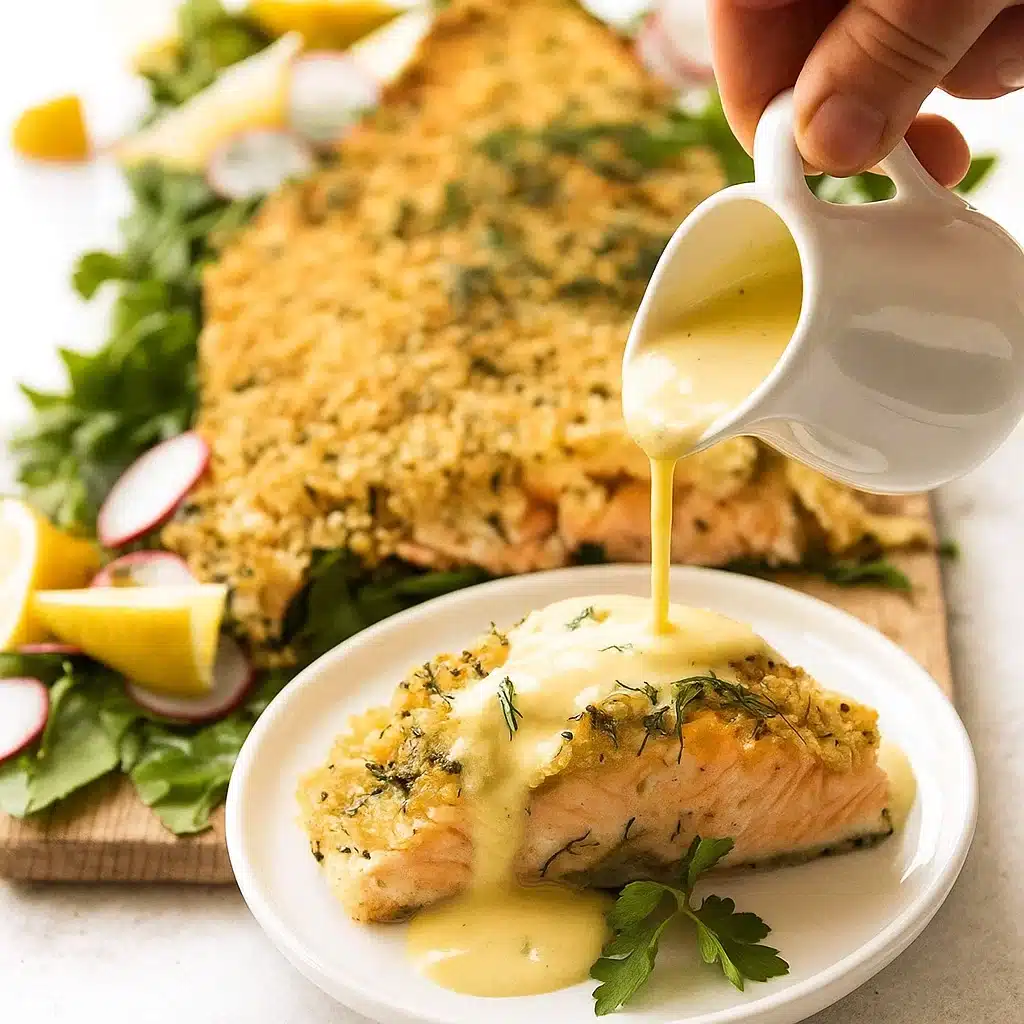
Once baked, carefully loosen the salmon from the foil (the skin often sticks, simplifying serving). Arrange watercress on a platter, then transfer the salmon on top. Serve immediately with warm or room-temperature lemon cream sauce and lemon wedges on the side.
Serving and Storage Tips
Serving Suggestions
- Pair with roasted asparagus, sautéed green beans, or a light citrus salad.
- For a fuller meal, accompany with creamy mashed potatoes or herbed rice pilaf.
- Garnish with extra dill or microgreens for a fine-dining touch.
Storage
- Refrigerate: Store leftovers in an airtight container for up to 2 days.
- Reheat: Warm gently in a 160°C (320°F) oven for 10 minutes or until heated through—avoid overbaking.
- Do not freeze once baked, as the crumb will lose its crisp texture.
Helpful Notes
- Wine substitution: If avoiding alcohol, replace wine with low-sodium chicken broth plus 1 tsp white wine vinegar for acidity.
- Cheese quality: Freshly grated Parmesan melts more smoothly and offers superior flavor.
- Make-ahead tip: Prepare the crumb mixture and sauce up to 1 day in advance; store separately in the refrigerator.
- Texture control: Toasting panko beforehand prevents sogginess and guarantees a delicate crunch.
Conclusion
This Baked Parmesan Crusted Salmon exemplifies elegant simplicity—an effortless yet luxurious meal that impresses every time. With its crisp, herbaceous crust and bright, creamy sauce, it’s a dish that bridges everyday cooking and fine dining. If you try this recipe, please leave a rating and comment to share your experience.
We’d love to know: Did you adjust the herbs or add your own twist to the sauce? Share your version below and inspire others to create their own gourmet masterpiece. Don’t forget to save this recipe on Pinterest or share it with friends who appreciate refined, easy-to-execute dishes.
Frequently Asked Questions (FAQ)
Can I use skinless salmon?
Yes. While skin-on salmon helps retain moisture, skinless fillets work well too. Line your tray with foil and handle carefully to prevent sticking.
Can I make this gluten-free?
Absolutely. Replace panko with gluten-free breadcrumbs or crushed rice crackers. The texture will remain crisp and satisfying.
Why did my sauce split?
This can happen if the heat is too high after adding cream. Always reduce to medium-low before combining ingredients, and whisk gently to emulsify.
Can I prepare the salmon ahead of time?
You can assemble the crusted salmon up to 6 hours in advance. Keep it covered and refrigerated; bake just before serving for the best texture.
How thick should the sauce be?
The lemon cream sauce should lightly coat the back of a spoon—rich but pourable. If too thick, whisk in a tablespoon of warm water or cream before serving.

Baked Parmesan Crusted Salmon
Ingredients
Method
- Step 1: Prepare the Salmon and Oven — Preheat oven to 200°C / 390°F (180°C fan). Line a baking tray with foil. Pat salmon dry and allow to sit at room temperature for 20 minutes before baking.
- Step 2: Toast the Panko — Spread panko on a tray, spray lightly with oil, and bake for 3–5 minutes until golden. Transfer to a bowl immediately to prevent over-browning.
- Step 3: Make the Parmesan Crumb Mixture — Combine toasted panko with melted butter, Parmesan, parsley, dill, lemon zest, salt, and pepper. Mix until evenly moistened.
- Step 4: Coat the Salmon — Place salmon on the prepared tray, spread Dijon mustard evenly over the surface, and press the Parmesan crumb mixture on top to coat.
- Step 5: Bake the Salmon — Bake for 20 minutes, or until the crust is golden and the salmon flakes easily with a fork. The center should remain slightly translucent for a moist result.
- Step 6: Prepare the Lemon Cream Sauce — In a saucepan, melt butter and sauté shallot for 2 minutes. Add broth and bring to a rapid boil, reducing by three-quarters. Lower heat and stir in cream, Dijon, lemon juice, sugar, salt, and pepper. Simmer 2–3 minutes until slightly thickened.
- Step 7: Assemble and Serve — Carefully loosen salmon from the foil and transfer to a serving platter over a bed of watercress. Serve with warm lemon cream sauce, lemon wedges, and a sprinkle of fresh dill.