
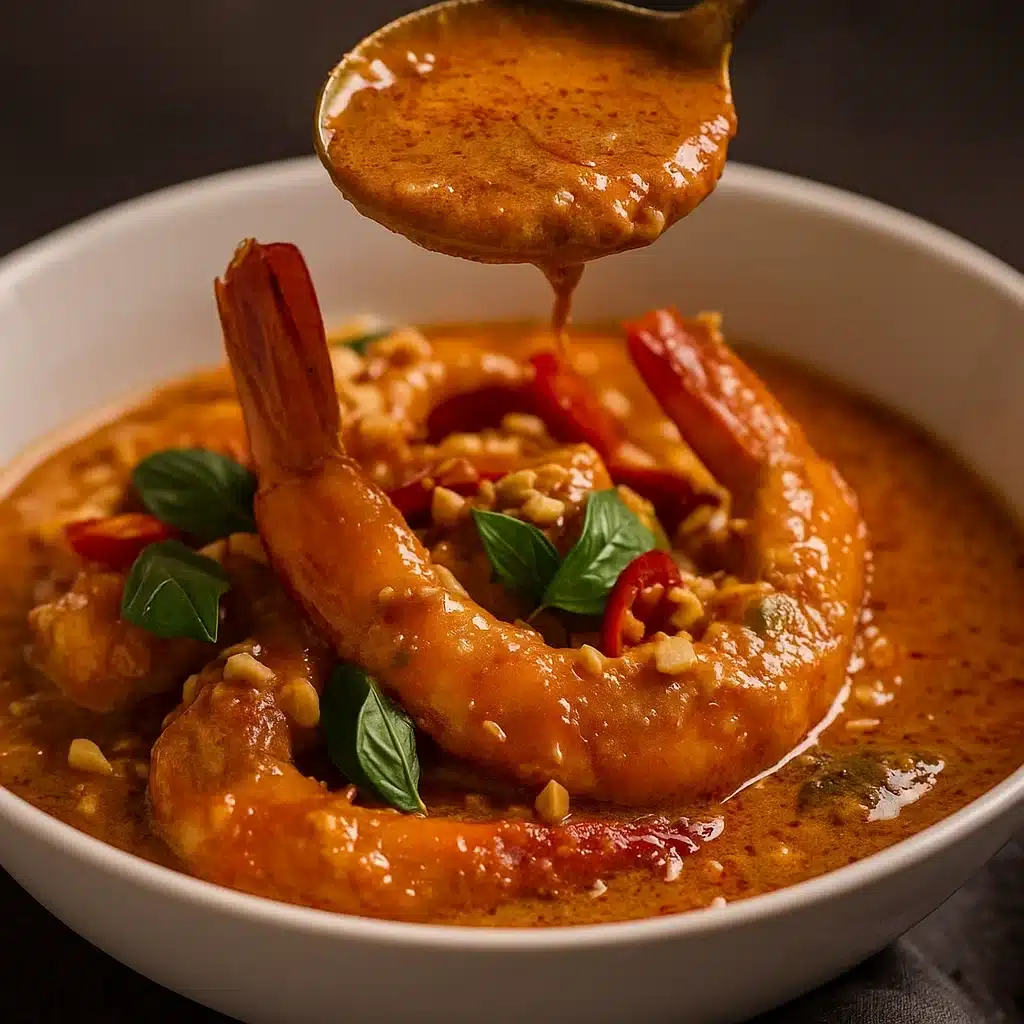
Panang curry is the ultimate Thai comfort dish — rich, creamy, and bursting with a harmony of sweet, salty, and spicy flavors. Made with tender prawns or chicken simmered in a fragrant coconut-based sauce, this curry strikes the perfect balance between indulgence and simplicity. Whether you’re craving a cozy weeknight dinner or planning to impress guests with authentic Thai flavors, this homemade Panang curry will steal the show. Forget takeout — once you taste this, you’ll never look back!
Table of Contents
Table of Contents
Why You’ll Love This Recipe
- Quick & easy: Ready in under an hour with simple steps and pantry-friendly ingredients.
- Versatile protein: Works beautifully with prawns, chicken, or even tofu.
- Authentic yet approachable: Traditional Thai flavors with easy-to-find ingredients.
- Restaurant-quality at home: Silky sauce, aromatic spices, and balanced heat.
- Comfort in every bite: Perfect for cozy dinners, date nights, or family meals.
Unlike other versions, this recipe builds flavor from scratch — with a homemade curry paste and optional prawn stock that elevate it to a whole new level of depth and authenticity.
Ingredients Needed
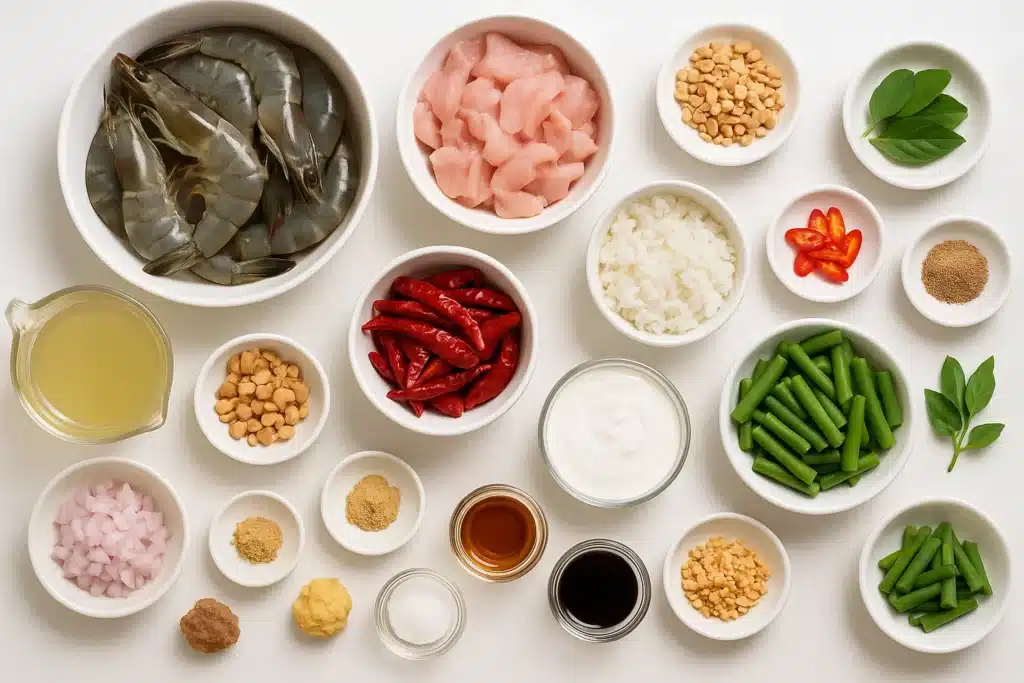
Choose Your Protein
- 700g (1.4 lb) whole raw prawns (shell-on, medium size) – or
- 350g (12 oz) boneless, skinless chicken thighs, thinly sliced (about 7mm / 1/3-inch thick)
For the Prawn Stock (optional but recommended)
- 1 ½ cups low-sodium chicken stock (not seafood-based)
For the Curry Paste
- ⅔ cup dried Chinese red chillies (about 24 medium, deseeded and chopped)
- 3 tbsp unsalted roasted peanuts
- 2 lemongrass stalks, finely grated (white part only)
- 2 eschalots (shallots), roughly chopped
- 1 tbsp galangal, finely grated (about 1.5cm piece)
- 5 garlic cloves, finely minced
- 1 ½ tbsp shrimp paste in bean oil
- ½ tsp each ground coriander, cumin, and nutmeg
- 1 tbsp finely sliced kaffir lime leaves (about 6 leaves)
For the Curry
- 3 tbsp canola or neutral oil
- 1 ¼ cups full-fat coconut cream (about 270ml can)
- 3 ½ tsp white sugar
- 4 ½ tsp fish sauce
- ¼ tsp kosher or cooking salt
- 200g (7 oz) green beans, trimmed and halved
- 12 Thai basil leaves
To Serve
- Jasmine rice, cooked
- 2 tbsp finely chopped unsalted peanuts
- Fresh red cayenne peppers, thinly sliced (optional)
- Extra Thai basil leaves, for garnish
How to Make Panang Curry
Step 1: Prepare the Prawn Stock
- Simmer the shells: Peel and devein prawns, saving the shells and heads.
- In a small pot, bring chicken stock to a gentle simmer. Add the prawn shells and heads.
- Crush & skim: Lightly crush the heads using a potato masher to release flavor. Skim off any orange foam.
- Simmer uncovered for 15 minutes, then strain through a fine sieve into a jug. You should have around 300ml (1¼ cups).
- Let the stock settle for 5 minutes so any sediment drops to the bottom. Use only the clear liquid.
Step 2: Make the Curry Paste
- Soften the chillies: Cut dried chillies in half, remove seeds, then soak them in 2 cups of boiling water for 30 minutes. Drain and reserve the soaking liquid.
- Grind the peanuts: Place peanuts in a small blender or jar. Pulse until finely ground.
- Blend everything: Add the drained chillies, ground peanuts, lemongrass, eschalots, galangal, garlic, shrimp paste, spices, and kaffir lime leaves to a blender.
- Add liquid as needed: Pour in about ¼ cup of the chilli soaking water and blend until smooth, scraping down the sides as needed. The result should be a thick, fragrant paste.

Step 3: Cook the Curry
- Fry the paste: Heat oil in a deep skillet or wok over medium-low heat. Add the curry paste and stir constantly for 5 minutes, until it darkens and becomes aromatic. This step develops deep flavor — don’t rush it!
- Add liquids: Carefully pour in 1 cup (250ml) of the prawn stock (avoid sediment) and stir in the coconut cream, sugar, fish sauce, and salt.
- Simmer: Add green beans and cook for about 2 minutes, until the sauce slightly thickens.
- Add protein: Stir in prawns (or chicken) and simmer for 2–3 minutes until cooked through.
- Finish with herbs: Stir in Thai basil leaves and remove from heat. The sauce should be creamy, balanced, and fragrant.
Serving and Storage Tips
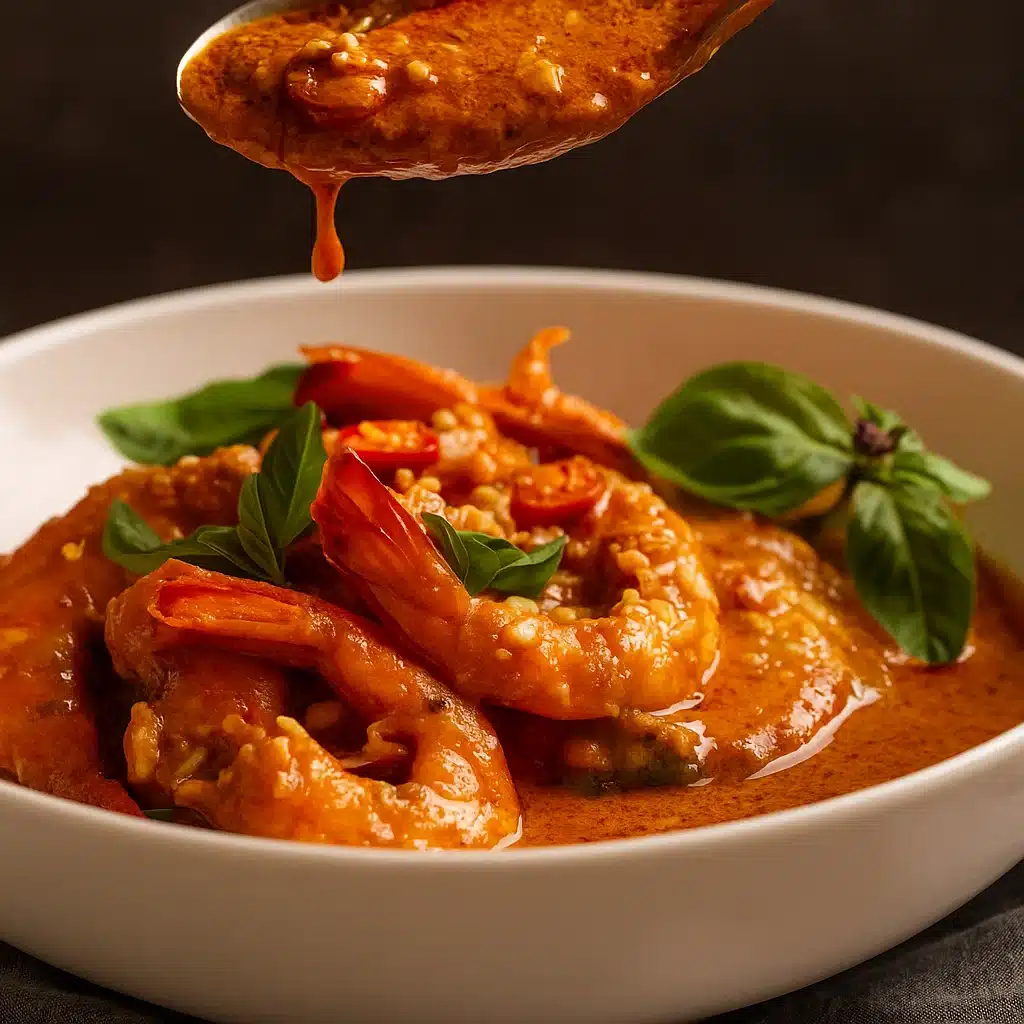
- Serving: Spoon over fluffy jasmine rice and top with chopped peanuts, thinly sliced red chillies, and fresh Thai basil leaves for a restaurant-style finish.
- Storage: Keep leftovers in an airtight container in the fridge for up to 3 days.
- Reheating: Warm gently on the stovetop over low heat, adding a splash of coconut milk or water to loosen the sauce.
- Freezing: Suitable for freezing (up to 2 months) — thaw overnight in the fridge before reheating
Helpful Notes
- Protein swaps: Use firm tofu or thinly sliced beef instead of prawns/chicken.
- Spice level: Dried Chinese chillies offer a moderate heat; use Thai chillies for extra fire.
- Texture tip: Don’t boil too vigorously once the coconut cream is added — it may split.
- Shortcuts: Use store-bought Panang curry paste if in a rush, but add a teaspoon of peanut butter for richness.
Conclusion
This homemade Panang curry delivers everything you crave in a Thai meal — creamy coconut sauce, bold aromatics, and the perfect touch of sweetness and spice. It’s a dish that feels luxurious yet comforting, ideal for both busy weeknights and special dinners.
If you tried this recipe, leave a comment and a star rating below — I’d love to hear how it turned out!
Don’t forget to share your version on Pinterest or Facebook — and tell us: Did you go with prawns or chicken?
Frequently Asked Questions (FAQ)
Can I use store-bought curry paste?
Yes! Use 3–4 tablespoons of store-bought Panang curry paste. For a richer, homemade flavor, stir in 1 teaspoon of peanut butter and a few kaffir lime leaves.
Can I make this curry vegan or vegetarian?
Absolutely. Swap fish sauce for soy sauce or vegan fish sauce and use tofu or mixed vegetables instead of prawns or chicken.
Why did my curry sauce split?
If the sauce boiled too rapidly after adding the coconut cream, it can separate. Keep the heat low and stir gently for a smooth, creamy texture.
Is Panang curry spicy?
Panang curry is milder than red curry but still packs flavor. Adjust heat by using fewer dried chillies or deseeding them thoroughly.
Can I freeze Panang curry?
Yes — cool completely before freezing in an airtight container. Reheat gently over low heat, adding coconut milk or water if the sauce thickens too much.

Authentic Thai Panang Curry (with Prawns or Chicken)
Ingredients
Method
- Step 1 – Prepare the Prawn Stock (optional): Peel and devein prawns, reserving shells and heads. In a saucepan, bring chicken stock to a gentle simmer. Add prawn shells and heads, lightly crush them, and simmer uncovered for 15 minutes. Strain through a fine sieve and let sit for 5 minutes to separate any sediment — use only the clear liquid.
- Step 2 – Make the Curry Paste: Soak dried chillies in 2 cups boiling water for 30 minutes, then drain (reserve soaking water). In a blender, grind peanuts finely, then add softened chillies, lemongrass, shallots, galangal, garlic, shrimp paste, spices, and kaffir lime leaves. Add about ¼ cup chilli soaking water and blend until smooth and thick.
- Step 3 – Cook the Curry: Heat oil in a wok over medium-low heat. Add curry paste and stir constantly for about 5 minutes, until fragrant and darker in color. Stir in 1 cup of prawn stock (or water) and coconut cream, then add sugar, fish sauce, and salt. Simmer gently for 2 minutes, then add green beans and cook until just tender. Add prawns (or chicken) and simmer 2–3 minutes until cooked through. Stir in Thai basil leaves and remove from heat.
- Step 4 – Serve: Spoon curry over steamed jasmine rice. Garnish with chopped peanuts, sliced chillies, and fresh Thai basil. Serve immediately while hot and aromatic.
Notes
• Swap prawns for chicken, tofu, or thinly sliced beef.
• Use store-bought Panang curry paste (3–4 tbsp) if short on time — add 1 tsp peanut butter for depth.
• Keep the heat low when adding coconut cream to prevent splitting.
• To make vegan, substitute soy or vegan fish sauce and tofu.
• Freeze leftovers for up to 2 months; reheat gently with extra coconut milk if needed.